|
VOOZH | about |
|
VOOZH | about |
A test strategy is a high-level document that defines the overall approach for testing an application in a structured and documented manner. It outlines goals, methods, and guidelines for the entire Software Testing Life Cycle (STLC) and acts as a reference for detailed test plans.
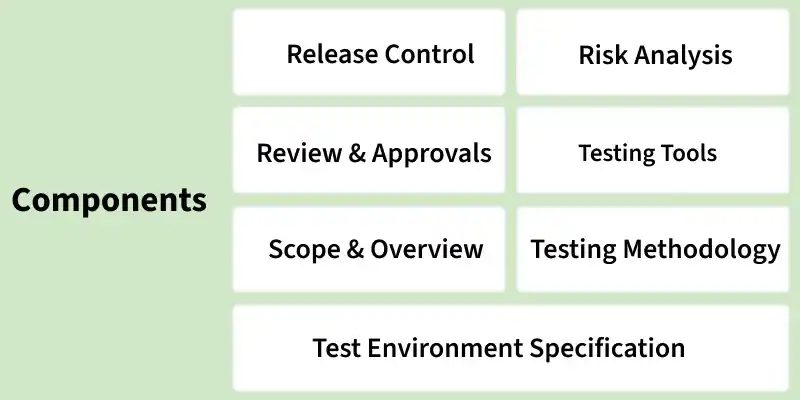
Defines how builds, deployments, and releases are managed across testing environments to ensure consistency.
Risk Analysis identifies potential risks that may impact testing or project delivery. It also provides strategies to minimize and handle those risks effectively.
This component ensures that the test strategy document is reviewed and approved by all stakeholders. It helps maintain alignment and accountability across teams.
The Testing Tools section defines the tools required for test execution, management, and automation. It helps in selecting the right tools for efficient testing.
Scope and Overview provides a high-level summary of the project and testing objectives. It defines the purpose, scope, and users of the test strategy document.
Testing Methodology explains the overall testing approach, including levels, processes, and team responsibilities. It ensures a structured and consistent testing process.
This section describes the setup and requirements of testing environments. It ensures a stable and reliable environment for executing test cases.
The following are the different types of test strategies:
Analytical strategy is based on analyzing requirements, risks, or specifications to derive test conditions. It ensures traceability between requirements and testing activities.
Model-based strategy uses system models to represent behavior and derive test cases. It is useful for complex systems and performance/load testing.
Methodical strategy follows predefined checklists and standards for testing. It ensures consistency and repeatability in the testing process.
This strategy strictly follows industry standards or regulatory guidelines. It is commonly used in regulated domains where compliance is mandatory.
Reactive strategy is based on experience and real-time system behavior. Testing is performed dynamically after the software is available.
Consultative strategy involves stakeholders in defining testing scope and priorities. It ensures that testing aligns with business and user expectations.
Regression-averse strategy focuses on preventing regression defects after changes. It ensures stability of the application through repeated and automated testing.
Test Strategy Selection is the process of choosing the most suitable testing approach based on project requirements, risks, and resources. It ensures that testing is efficient, effective, and aligned with business goals.
A Test Strategy document defines the overall approach and guidelines for testing activities in a project. It provides a structured plan to ensure effective testing aligned with business and technical requirements.
| Test Plan | Test Strategy |
|---|---|
| It's developed from a set of software requirements (SRS). | It comes from a Business Requirement paper (BRS). |
| The test lead or manager is in charge of preparing it. | The project manager or the business analyst creates it. |
| The components include the test plan's id, features to be tested, test techniques, testing tasks, features pass or fail criteria, test deliverables, responsibilities, and timetable, among others. | The components of a test strategy include objectives and scope, documentation formats, test processes, team reporting structure, client communication strategy, and so on. |
| After the requirements have been approved, the test plan is written. | The test strategy comes first, followed by the test plan. |
| It should be simple and straightforward. | The test approach serves as a general guide for the project at hand. |