|
VOOZH | about |
|
VOOZH | about |
Dynamically @BeforeTest ensures the output directory gets prepared before test execution at some point, using the Output directory at that specific instance for storing the report and so helps manage effectively.
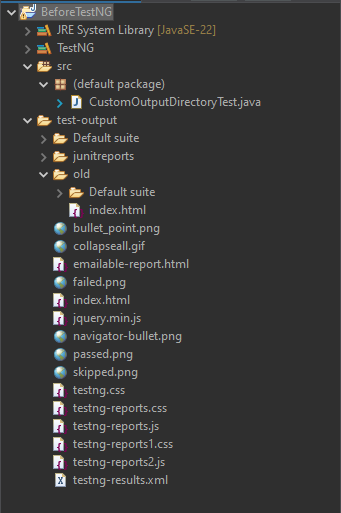
By default, report and log files will appear in the test-output folder under your project root directory. Chances are good that we'll want to create another output directory anyhow, both as a way of collecting all test reports in one place and as something to feed them into some CI/CD pipeline.
In your test class, use the @BeforeTest annotation to set the output directory path before any test methods are executed.
Within the @BeforeTest method, use System.setProperty to set a custom output directory path. This allows you to specify where your test output files will be stored.
If you need to access the directory path in your test code, you can retrieve it using System.getProperty.
@BeoreTest Method
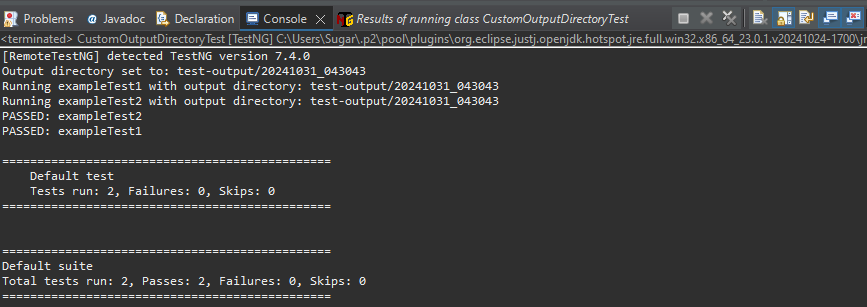
test-output/20241031_123456).System.setProperty("outputDir", outputDirectory), so it can be accessed anywhere in the code.@Test Methods
Using the @BeforeTest, which configures the directory for the output in TestNG, allows for more dynamic configurations of output, ensuring test results can all be saved in unique directory names each time the output is made.
This in turn helps better organize test runs, as it makes different outputs from various environments, or cycles, easier to manage and review.