|
VOOZH | about |
|
VOOZH | about |
TestNG is another popular test framework with significant benefits over JUnit. TestNG (Test Next Generation) is a next-generation Java testing framework that provides annotations for controlling the test execution flow. In TestNG, annotations define the behavior and execution order of methods during the testing lifecycle. Understanding the TestNG Annotation Order is crucial, as it helps ensure that test setup, execution, and teardown occur in the correct sequence.
TestNG Annotation Order is the pre-defined order in which TestNG runs different methods annotated with TestNG annotations such as @BeforeSuite, @BeforeTest, @BeforeClass, etc. It ensures that all setup methods are run before test methods and teardown methods are run after them. Proper configuration of order facilitates management of test lifecycles, hence, tests become more maintainable and readable.
Here is the standard order of execution for TestNG annotations:
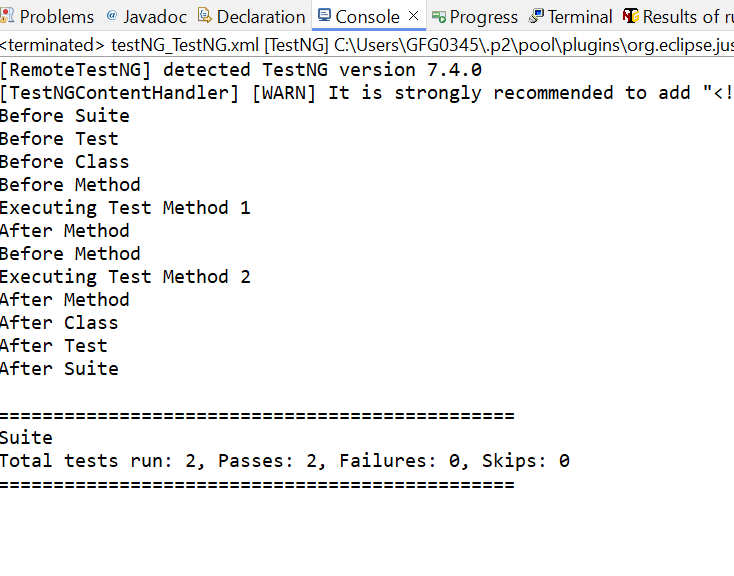
Following program illustrate the TestNG Annotation Order
ExampleTest.java
testng.xml
To efficiently handle the lifecycle of tests, understanding the order in which TestNG Annotation orders work is very important. Using the right annotations, such as @BeforeSuite, @Test, and @AfterMethod, in their right order will ensure tests get initialized, executed, and cleaned up in a structured and predictable way, leading to your desired control over the execution flow, making test configuration simpler, reducing the risk of getting stuck by issues during the setup or teardown phase, and making the test suite hence more manageable and strong.