Hybrid systems in neural networks combine neural models with other computational techniques to solve complex problems more effectively. They aim to use the learning ability of neural networks along with the strengths of traditional or rule-based methods.
Integrate neural networks with fuzzy logic, genetic algorithms or expert systems
Improve accuracy and decision-making in complex tasks
Useful when pure neural models are not sufficient
Common in control systems, optimization and pattern recognition
Types of Hybrid Systems
Let's understand the various types of Hybrid systems in neural networks:
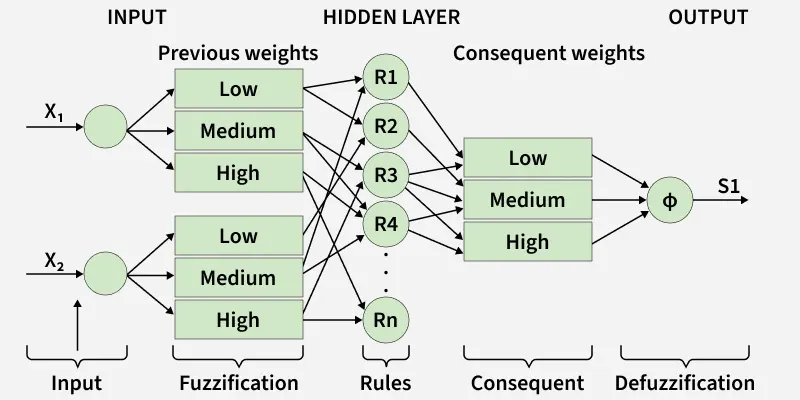
A Neuro-Fuzzy System is a hybrid model that integrates neural networks with fuzzy logic systems, enabling both adaptive learning from data and human-like reasoning using linguistic variables. While fuzzy systems provide interpretability through rules, neural networks automate the tuning of fuzzy parameters.
Uses fuzzy IF–THEN rules to model reasoning
Membership functions represent vague or uncertain concepts
Input data is first passed into fuzzification units, where crisp numerical values are converted into fuzzy linguistic terms using membership functions.
These fuzzy inputs activate a set of IF–THEN fuzzy rules that represent human-like reasoning patterns.
The fuzzy inference engine combines the activated rules to generate intermediate fuzzy outputs.
A neural network learning mechanism adjusts the membership function parameters and rule weights based on training error.
The final output is obtained through defuzzification, converting fuzzy results back into precise numerical values.
Applications
Medical Diagnosis: Handles uncertain symptoms and supports interpretable clinical decisions.
Industrial Process Control: Regulates temperature, pressure and flow in complex systems.
Advantages
Uncertainty Handling: Effectively manages vague and imprecise inputs.
A Neuro-Genetic System combines neural networks with genetic algorithms to optimize network parameters, architectures or learning strategies using evolutionary principles inspired by natural selection.
Population-based optimization instead of gradient descent
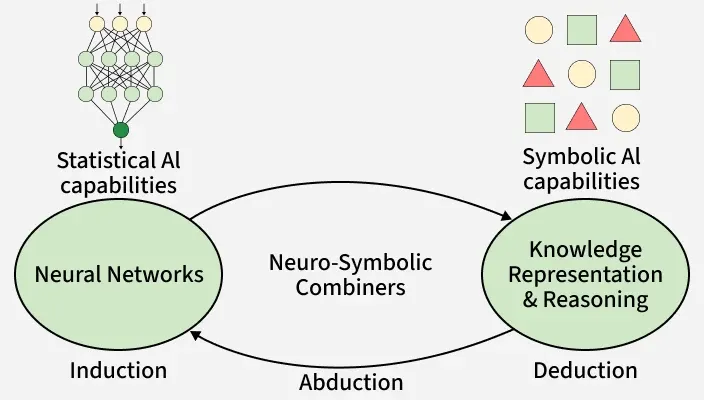
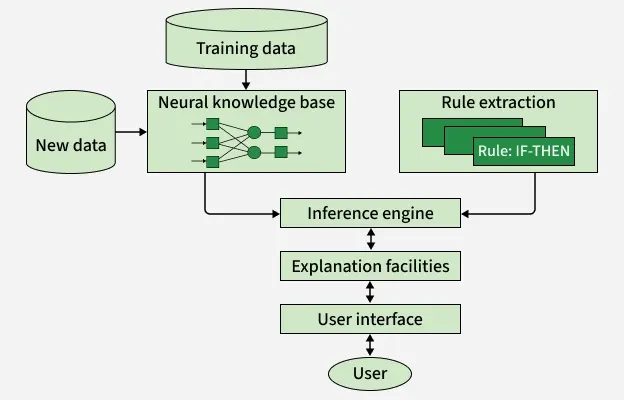
A Neuro-Symbolic System integrates neural networks with symbolic reasoning frameworks, enabling the system to learn from data while performing logical inference and explanation using explicit rules.
Combines sub-symbolic learning with symbolic logic
Uses knowledge bases or logical rules
Supports explainable AI
Incorporates prior domain knowledge
Working
Neural networks learn patterns and relationships from raw data through standard training processes.
Symbolic knowledge, such as logical rules or constraints, is stored separately or embedded within the system.
Neural predictions are passed to the symbolic reasoning layer for validation, explanation or refinement.
Logical rules may correct, restrict or justify neural outputs to ensure consistency.
The final decision combines both learned knowledge and symbolic reasoning.
Applications
Expert Decision Systems: Combines learning with logical reasoning in complex domains.
Explainable AI: Supports transparent decision-making in regulated environments.
Advantages
Explainability: Decisions can be traced through logical rules.
Knowledge Integration: Incorporates domain expertise into learning systems.
Limitations
System Complexity: Integration of symbolic and neural components is difficult.
Rule Engineering Effort: Requires manual design and maintenance of rules.
Neuro-Probabilistic Systems combine neural networks with probabilistic models such as Bayesian inference to explicitly model uncertainty in predictions and decision-making.
Bayesian probability theory
Uncertainty quantification
Confidence-aware predictions
Probabilistic inference
Working
Input data is processed by a neural network to extract features or generate predictions.
These outputs are fed into a probabilistic model, such as a Bayesian framework.
The probabilistic component estimates uncertainty, likelihood and confidence levels.
Prior knowledge and observed evidence are combined using probabilistic inference.
The system produces predictions along with confidence scores, improving decision reliability.
Applications
Speech Recognition: Models uncertainty in noisy audio environments.
Risk Assessment: Estimates probabilities and confidence in critical decisions.
Neural Networks with Rule-Based Systems represent a hybrid intelligence framework that combines the adaptive, data-driven learning capability of neural networks with the explicit, deterministic reasoning of rule-based expert systems.
Rule validation of neural outputs
Error correction mechanisms
Domain knowledge enforcement
Consistency assurance
Working
Neural networks analyze input data and generate initial predictions using learned patterns.
A predefined rule-based expert system examines these predictions.
Rules validate outputs based on domain-specific conditions or constraints.
Invalid or risky predictions are corrected, flagged or reclassified.
The final output reflects both adaptive learning and deterministic reasoning.
Applications
Fraud Detection: Combines anomaly detection with rule-based validation.
Healthcare Decision Support: Ensures predictions follow medical guidelines.
Advantages
Logical Consistency: Enforces domain constraints on neural outputs.
Error Reduction: Minimizes false positives and critical mistakes.
Limitations
Rule Maintenance: Rules require frequent updates as domains evolve.
Limited Scalability: Large rule sets reduce system efficiency.
6. Neural Networks with Classical Machine Learning Mode
👁 6 Neural Networks with Classical Machine Learning Mode
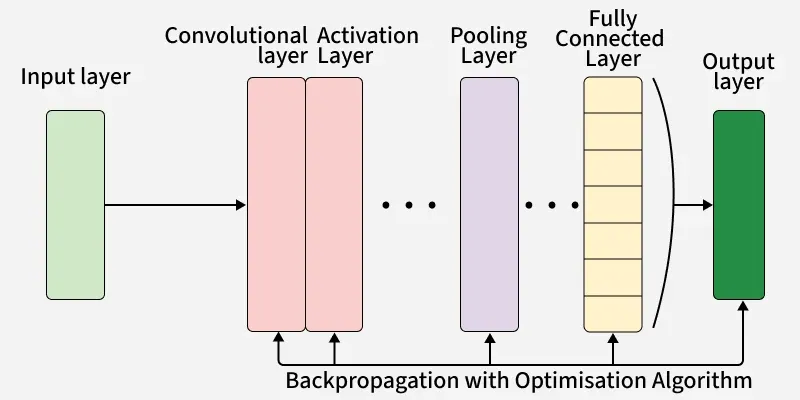
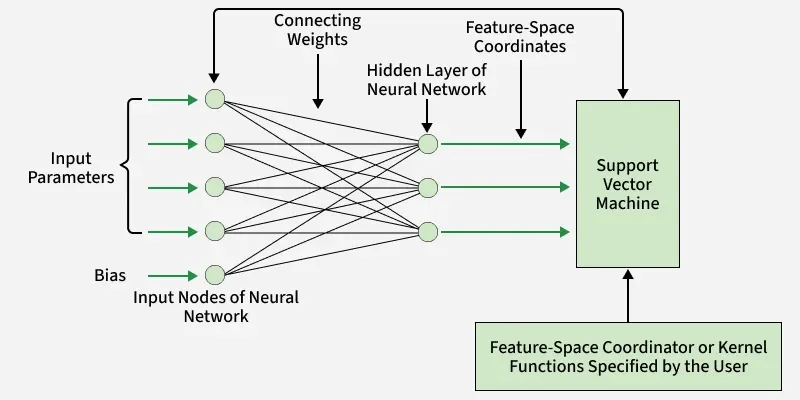
This hybrid system integrates neural networks with classical machine learning algorithms, leveraging neural networks for feature extraction and traditional models for decision-making.
Modular pipeline architecture
Ensemble learning strategies
Improved generalization
Flexible deployment
Working
Raw data is first processed by a neural network for feature extraction.
Learned feature representations are passed to a classical machine learning model such as SVM or decision tree.
The classical model performs classification or regression using these features.
In ensemble setups, outputs from multiple models may be combined.
The final prediction benefits from both deep representation learning and traditional decision boundaries.
Applications
Image Recognition Pipelines: Uses deep features with traditional classifiers.
Customer Analytics: Improves segmentation and prediction accuracy.
Advantages
Performance Improvement: Combines strengths of deep and classical models.
Modular Design: Allows flexible model replacement and tuning.
Limitations
Pipeline Complexity: Multiple components increase system overhead.
Hyperparameter Tuning: Requires careful coordination across models.
Comparison
Let's compare the various types of hybrid systems,