|
VOOZH | about |
|
VOOZH | about |
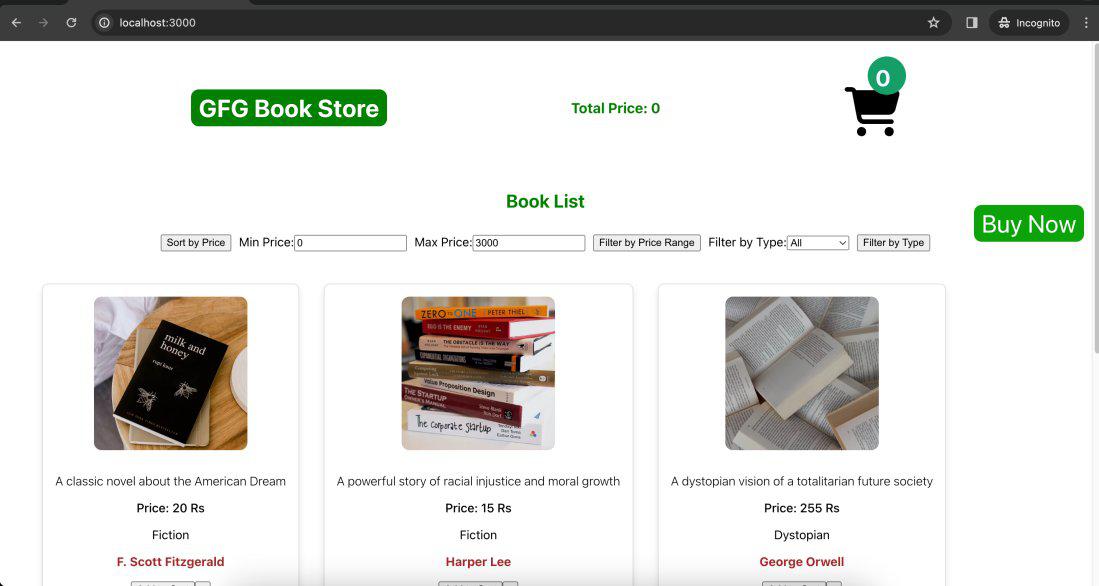
Bookstore E-commerce project is a great way to showcase your understanding of full-stack development. In this article, we'll walk through the step-by-step process of creating a Bookstore E-commerce using the MERN (MongoDB, Express.js, React, Node.js) stack. This project will showcase how to set up a full-stack web application where users can view, filter, and purchase various books.
Preview of final output: Let us have a look at how the final application will look like:
Step 1: Create a directory for project
mkdir server
cd server
Step 2: Initialized the Express app and installing the required packages
npm init -y
npm i express mongoose cors
Project Structure:
The updated dependencies in package.json file of backend will look like:
"dependencies": {
 "cors": "^2.8.5",
 "express": "^4.18.2",
 "mongoose": "^8.0.0",
}
Example: Create `server.js` and write the below code.
Start the backend server with the following command:
node server.jsStep 1: Set up React frontend using the command.
npx create-react-app client
cd client
Step 2: Install the required dependencies.
npm i @fortawesome/free-solid-svg-icons
npm i @fortawesome/react-fontawesome
Project Structure:
The updated dependencies in package.json file of frontend will look like:
"dependencies": {
 "@fortawesome/free-solid-svg-icons": "^6.5.1",
 "@fortawesome/react-fontawesome": "^0.2.0",
 "@testing-library/jest-dom": "^5.17.0",
 "@testing-library/react": "^13.4.0",
 "@testing-library/user-event": "^13.5.0",
 "react": "^18.2.0",
 "react-dom": "^18.2.0",
 "react-scripts": "5.0.1",
 "web-vitals": "^2.1.4"
}
Example: Create the required files and write the following code.
To start frontend code:
npm startOutput: