|
VOOZH | about |
|
VOOZH | about |
The SQL DISTINCT clause is used to remove duplicate values from query results. It ensures that the output shows only unique records for the specified column(s).
Example: First, we will create a demo SQL database and table, on which we will use the Distinct Clause command.
Query:
SELECT DISTINCT Department
FROM Employees;
Output:
Syntax:
SELECT DISTINCT column1, column2
FROM table_name;Note: If used on multiple columns, DISTINCT returns unique combinations of values across those columns.
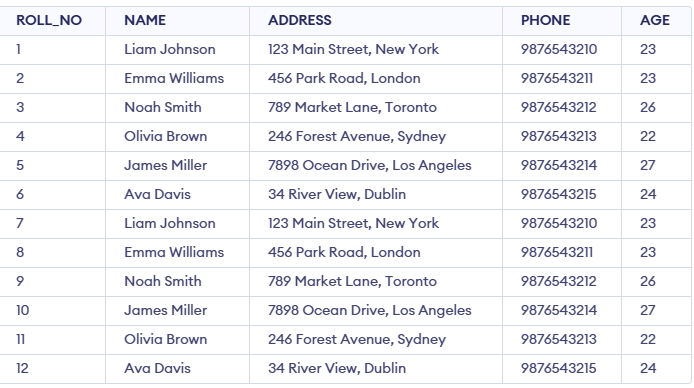
Let’s create a sample table and populate it with some duplicate entries. We will see some examples of using the DISTINCT keyword with a sample students table.
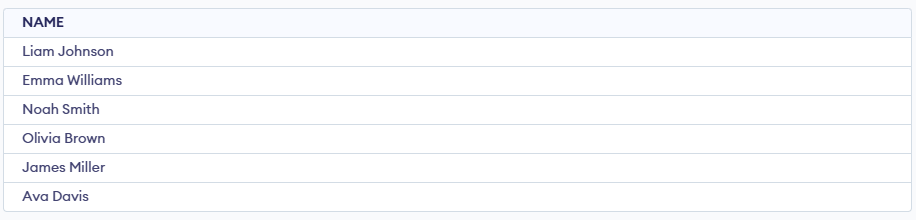
The query returns only unique names, eliminating the duplicate entries from the table.
Query:
SELECT DISTINCT NAME
FROM students;
Output:
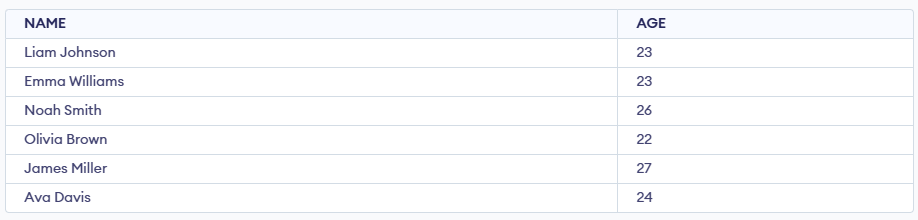
This query retrieves distinct combinations of NAME and AGE, if two rows have the same name and age, only one of them will appear in the result set.
Query:
SELECT DISTINCT NAME, AGE
FROM students;
Output:
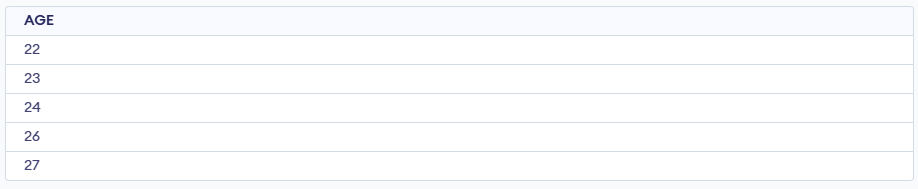
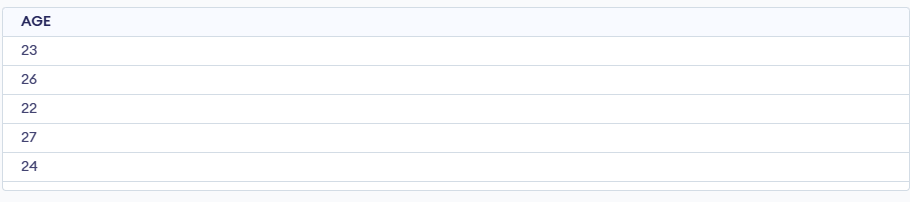
We can combine the DISTINCT keyword with the ORDER BY clause to filter unique values while sorting the result set. This query retrieves the unique ages from the students table and sorts them in ascending order.
Query:
SELECT DISTINCT AGE
FROM students
ORDER BY AGE;
Output:
Here, we will check the COUNT() function with a DISTINCT clause, which will give the total number of students by using the COUNT() function.
Query:
SELECT COUNT(DISTINCT ROLL_NO)
FROM Students ;
Output:
In SQL, the DISTINCT keyword treats all NULL values as the same, not as separate unique values. As a result, even if multiple rows contain NULL, DISTINCT will return NULL only once in the result set.
Query:
INSERT INTO students (ROLL_NO, NAME, ADDRESS, PHONE, AGE)
VALUES (13, 'John Doe', '123 Unknown Street', '9876543216', NULL),
(14, 'James Brown', '129 Unknown Street', '9876554317', NULL);

SELECT DISTINCT AGE
FROM students;
Output: