|
VOOZH | about |
|
VOOZH | about |
In this article, we’ll walk through the step-by-step process of creating a Expense Management System using the MERN (MongoDB, ExpressJS, React, NodeJS) stack. This project will showcase how to set up a full-stack web application where users can add their budget and put daily expenses that get deducted from the budget.
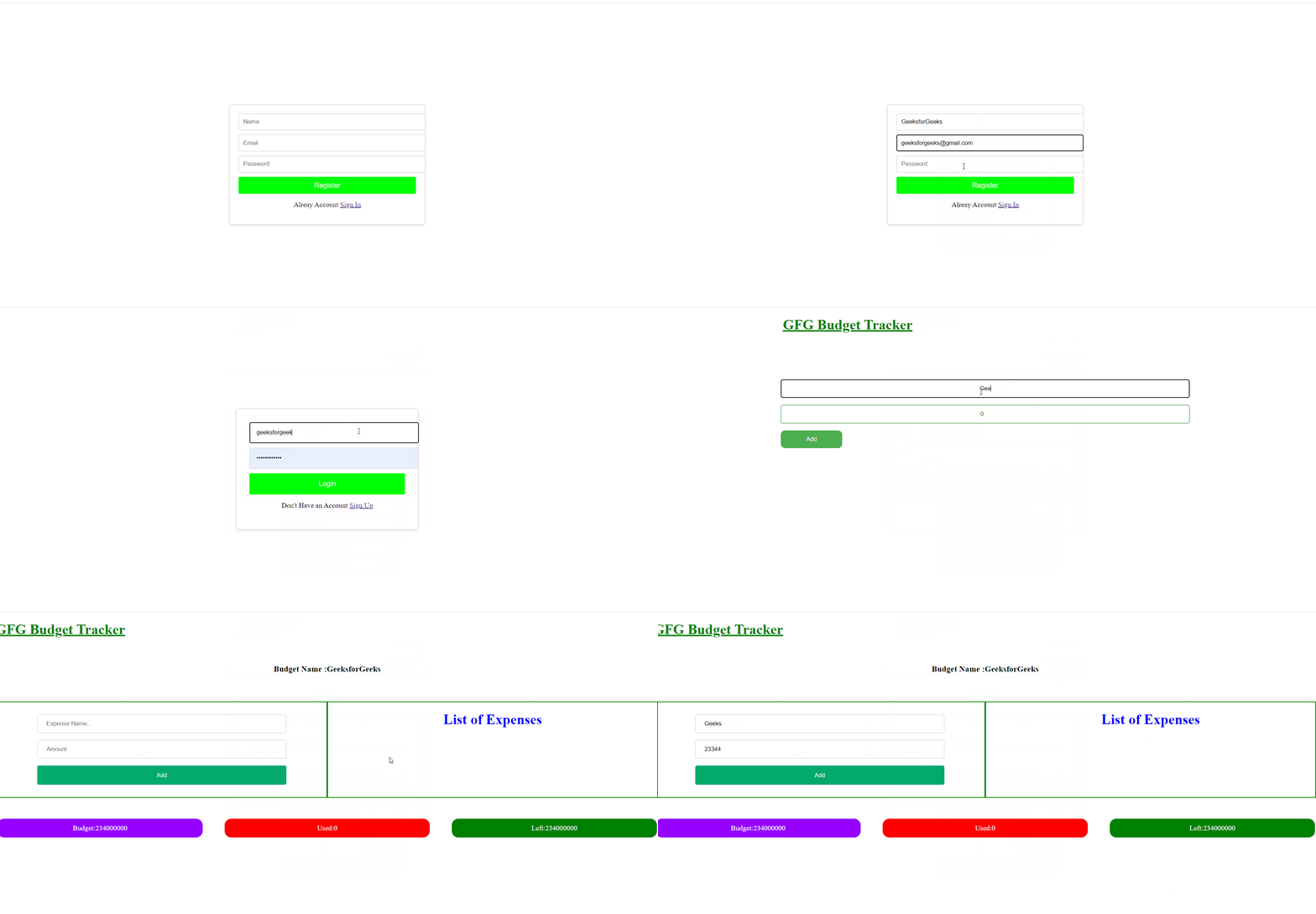
Output Preview: Let us have a look at how the final output will look like.
Step 1: Create a directory for project
mkdir Backend
cd Backend
Step 2: Create a server using the following command in your terminal.
npm init -yStep 3: Install the required dependencies in your server using the following command.
npm i express mongoose cors nodemon jsonwebtokenThe package.json file of backend will look like:
"dependencies": {
 "bcryptjs": "^2.4.3",
 "cors": "^2.8.5",
 "express": "^4.18.2",
 "jsonwebtoken": "^9.0.2",
 "mongoose": "^8.2.0"
}
Example: Below is an example of server for creating budget tracker with MERN Stack.
Start your server using the following command.
npm start
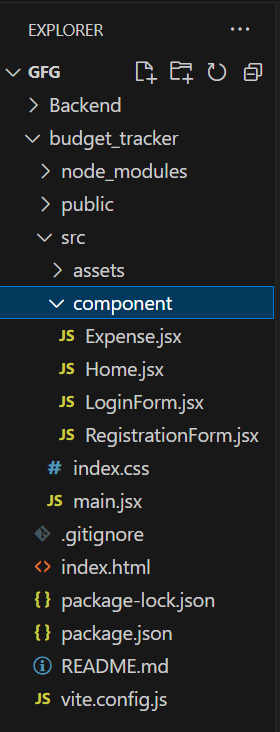
Step 1: Initialized the React App with Vite and installing the required packages
npm create vite@latest -y
->Enter Project name: "Frontend"
->Select a framework: "React"
->Select a Variant: "Javascript"
cd Frontend
npm install
The package.json file of frontend will look like:
 "dependencies": {
 "react": "^18.2.0",
 "react-dom": "^18.2.0",
 "react-icons": "^5.0.1",
 "react-router-dom": "^6.22.2"
 },
 "devDependencies": {
 "@types/react": "^18.2.56",
 "@types/react-dom": "^18.2.19",
 "@vitejs/plugin-react": "^4.2.1",
 "eslint": "^8.56.0",
 "eslint-plugin-react": "^7.33.2",
 "eslint-plugin-react-hooks": "^4.6.0",
 "eslint-plugin-react-refresh": "^0.4.5",
 "vite": "^5.1.4"
 }
}
Example: Below is an example of frontend for creating budget tracker with MERN Stack.
Start your frontend application using the following command.
npm run devOutput: