|
VOOZH | about |
|
VOOZH | about |
The MySQL CASE function is a conditional expression that returns a value when the first matching condition is met. If no condition is satisfied, it returns the value in the ELSE part or NULL if ELSE is not provided.
Syntax:
CASE
 WHEN condition1 THEN result1
 WHEN condition2 THEN result2
 WHEN conditionN THEN resultN
 ELSE result
END;
Parameters:
The CASE expression accepts multiple conditions and corresponding result values as given below:
Returns:
It returns the result of the first condition that evaluates to TRUE. If no condition is satisfied, it returns the value specified in the ELSE part. If ELSE is not provided, it returns NULL.
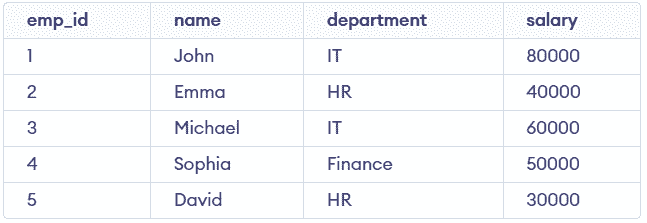
The CASE function evaluates conditions sequentially and returns a result when a condition is met. It is commonly used to categorize or transform data directly within queries. First, we will create a demo table on which the CASE Function will be applied:
This example uses CASE to group employees into salary categories such as high, medium, and low based on their salary values.
Query:
SELECT name, salary,
CASE
 WHEN salary > 70000 THEN 'High Salary'
 WHEN salary BETWEEN 50000 AND 70000 THEN 'Medium Salary'
 ELSE 'Low Salary'
END AS salary_category
FROM employees;
Output:
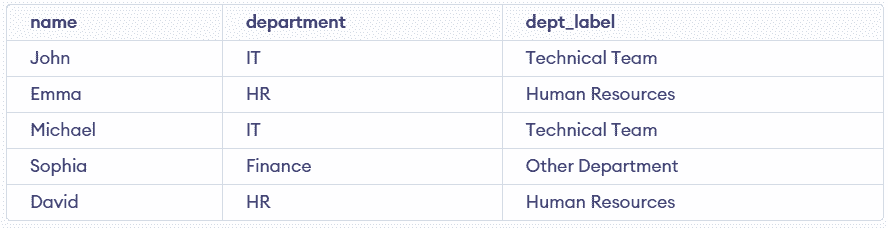
This example assigns custom labels to employees based on their department using conditional logic.
Query:
SELECT name, department,
CASE
 WHEN department = 'IT' THEN 'Technical Team'
 WHEN department = 'HR' THEN 'Human Resources'
 ELSE 'Other Department'
END AS dept_label
FROM employees;
Output:
This example uses CASE inside ORDER BY to sort employees based on salary priority instead of direct numeric sorting.
Query:
SELECT name, salary
FROM employees
ORDER BY
CASE
 WHEN salary >= 70000 THEN 1
 WHEN salary >= 50000 THEN 2
 ELSE 3
END;
Output:
The CASE expression should be used thoughtfully to keep queries clean, efficient, and easy to understand. Following best practices helps avoid logical errors and improves overall query readability.