|
VOOZH | about |
|
VOOZH | about |
Natural Language Generation (NLG) is a subfield of Artificial Intelligence and Natural Language Processing (NLP) concerned with automatically generating contextually relevant text from structured or unstructured data. It enables machines to articulate thoughts or observations in natural language.
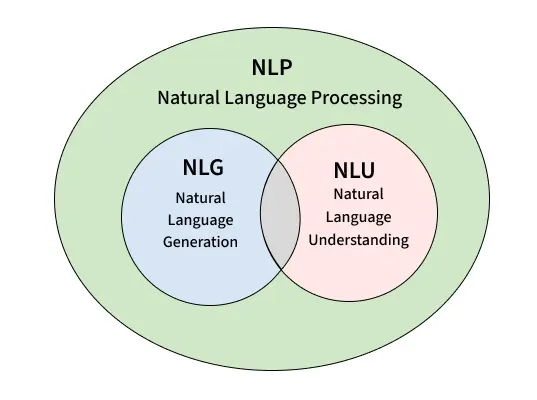
While NLP covers the spectrum of interpreting and producing language, NLG specifically focuses on the production aspect like turning raw data into readable text. It powers applications ranging from automated news articles and personalized emails to financial reporting systems and intelligent chatbots.
NLG is the task of generating text that resembles human writing, given a structured or semi-structured input. This input can be in the form of tabular data, knowledge graphs or programmatic events. NLG can be viewed as the reverse of Natural Language Understanding (NLU). While NLU transforms human language into machine-readable formats (parsing questions or commands), NLG transforms machine-represented information into human-friendly text.
A typical NLG pipeline consists of the following stages:
Evaluating the effectiveness of generated text is a complex but critical task. Common evaluation techniques include:
Natural Language Processing (NLP), Natural Language Generation (NLG) and Natural Language Understanding (NLU) are three distinct but linked areas of natural language processing. Here's a brief overview of the differences between them:
| Aspect | NLP | NLG | NLU |
|---|---|---|---|
| Input | Raw or structured language | Structured data | Natural language text |
| Output | Structured or unstructured text | Human-readable text | Machine-readable meaning |
| Goal | Interpret and produce language | Generate natural-sounding text | Understand meaning and intent |
| Techniques Used | Parsing, tagging, vectorization | Templates, ML models, transformers | Syntax analysis, semantics, embeddings |
| Tasks | Translation, speech-to-text, summarization | Report writing, product descriptions | Intent detection, sentiment analysis |
| Common Tools | spaCy, NLTK, Hugging Face | GPT, T5, SimpleNLG | BERT, RoBERTa, Dialogflow |
| Evaluation Metrics | Accuracy, F1-score | BLEU, ROUGE | Precision, recall, intent accuracy |
Natural Language Generation has seen increasing usage across domains where large volumes of structured data need to be communicated in a human-readable form: