|
VOOZH | about |
|
VOOZH | about |
Text data is one of the most common forms of unstructured data, and converting it into a numerical representation is essential for machine learning models.
Term Frequency-Inverse Document Frequency (TF-IDF) is a widely used text vectorization technique that helps represent text in a way that captures word importance. It evaluates the importance of a word in a document relative to a collection (corpus) of documents. It consists of two components:
The final TF-IDF score is calculated as:
Words that appear frequently in a document but are rare across the corpus will have higher TF-IDF scores.
TensorFlow provides efficient ways to handle text preprocessing, including TF-IDF representation. We will use the tf.keras.layers.TextVectorization layer to compute TF-IDF features.
TensorFlow’s TextVectorization layer can be used to automatically compute TF-IDF values.
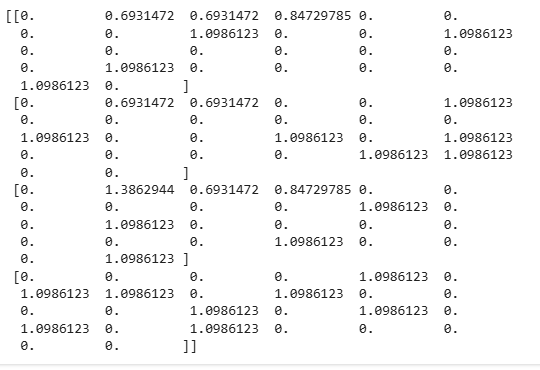
Output:
Each row in the TF-IDF matrix corresponds to a document in the corpus, and each column represents a tokenized word. The values indicate the importance of words within each document.
TF-IDF is a fundamental technique for representing text in a way that emphasizes important words. TensorFlow’s TextVectorization layer simplifies TF-IDF computation, making it a great choice for NLP applications. With this approach, you can efficiently preprocess text and feed it into machine learning models for tasks like classification, clustering, and information retrieval.