Pandas series is a One-dimensional ndarray with axis labels. The labels need not be unique but must be a hashable type. The object supports both integer- and label-based indexing and provides a host of methods for performing operations involving the index.
Pandas
Series.shift() function shift index by desired number of periods with an optional time freq. When freq is not passed, shift the index without realigning the data.
Syntax: Series.shift(periods=1, freq=None, axis=0, fill_value=None)
Parameter :
periods : Number of periods to shift. Can be positive or negative.
freq : Offset to use from the tseries module or time rule (e.g. ‘EOM’)
axis : Shift direction.
fill_value : The scalar value to use for newly introduced missing values
Returns : Copy of input object, shifted.
Example #1: Use
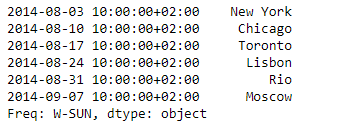
Series.shift() function to shift the data of the given Series object by 2 periods.
Output :
👁 Image
Now we will use
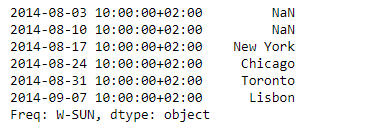
Series.shift() function to shift the data in the given series object by 2 periods.
Output :
👁 Image
As we can see in the output, the
Series.shift() function has successfully shifted the data over the index. Notice the data corresponding to the last two indexes has been dropped.
Example #2: Use
Series.shift() function to shift the data of the given Series object by -2 periods.
Output :
👁 Image
Now we will use
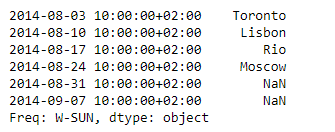
Series.shift() function to shift the data in the given series object by -2 periods.
Output :
👁 Image
As we can see in the output, the
Series.shift() function has successfully shifted the data over the index. Notice the data of the first two indexes has been dropped.