|
VOOZH | about |
|
VOOZH | about |
Analyzing Google Play Store reviews can provide valuable insights into user sentiments, app performance, and areas for improvement. In this project, we'll explore how to analyze Google Play Store reviews using R Programming Language covering theoretical concepts, dataset creation, and multiple visualization examples to extract meaningful information from the reviews.
Google Play Store reviews provide users feedback and ratings for various mobile apps. Analyzing these reviews can help app developers understand users' sentiments, identify common themes or issues, and make data-driven decisions to enhance app performance and user experience.
Now take on practical example for Analyzing Google Play Store Reviews in R.
Let's create a sample dataset and then provide multiple visualization examples in R.
Output:
 reviewId userName content rating sentiment thumbsUpCount reviewCreatedVersion reviewTime
1 gp:1 Alice Smith Needs improvement. 1 Neutral 47 2.0 2022-03-15
2 gp:2 Alice Smith Great app! 5 Neutral 25 1.0 2022-01-03
3 gp:3 Alice Smith Needs improvement. 4 Negative 2 2.0 2022-09-22
4 gp:4 John Doe Great app! 3 Neutral 19 1.0 2022-08-03
5 gp:5 John Doe Needs improvement. 1 Positive 47 3.0 2022-01-31
6 gp:6 John Doe Great app! 4 Neutral 65 2.0 2022-06-27
Here are multiple visualization examples for the provided Google Play Store reviews dataset:
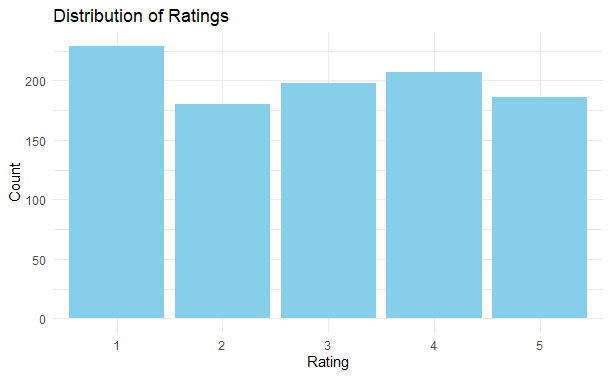
To visualize the distribution of ratings in the Google Play Store reviews dataset, we can create a histogram or a bar plot. Here's how you can do it using a bar plot:
Output:
The code creates a bar plot showing the count of each rating value in the dataset. Each bar represents a rating value (1 to 5 stars), and the height of the bar represents the frequency or count of reviews with that rating.
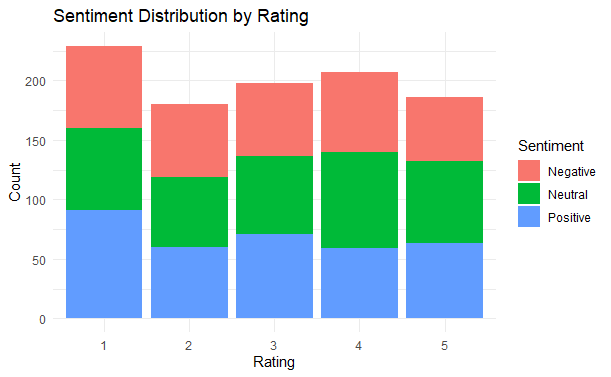
To visualize the sentiment distribution by rating in the Google Play Store reviews dataset, we can create a stacked bar plot. Here's how you can do it using ggplot2:
Output:
This code creates a stacked bar plot where each bar represents a rating value (1 to 5 stars), and the height of each segment within the bar represents the count of reviews with a particular sentiment (positive, negative, neutral) for that rating value.
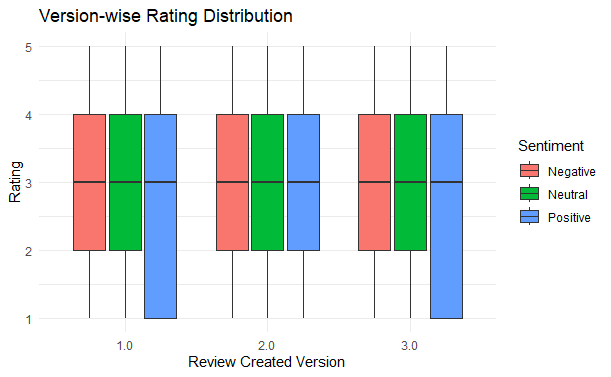
To visualize the version-wise rating distribution in the Google Play Store reviews dataset, we can create a box plot. Here's how you can do it using ggplot2:
Output:
This code creates a box plot where each box represents the distribution of ratings for a specific version of the app. The box extends from the lower to the upper quartile values of the data, with a line at the median. The whiskers extend to the most extreme data points not considered outliers, and outliers are plotted individually.
Output:
The heatmap generated by this code visualizes the frequency of reviews over time, categorized by sentiment. Here is what the output tells us:
This visualization helps in understanding temporal trends in user sentiment, which can be valuable for identifying periods of high user dissatisfaction or satisfaction.
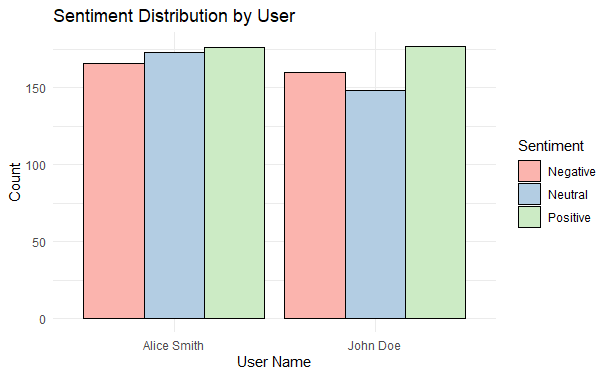
To visualize the sentiment distribution by user, we can create a bar plot that shows the count of each sentiment type for different users. This can help us understand how individual users are contributing to the overall sentiment of the reviews.
Output:
This visualization helps in identifying which users are more negative or positive in their feedback, providing insights into user behavior and sentiment trends.
reating a pie chart to visualize the sentiment distribution is a great way to understand the overall sentiment of the reviews at a glance.
Output:
pie chart shows the sentiment distribution of the reviews. The chart will have slices of different sizes and colors representing the count of positive, negative, and neutral reviews.
This visualization provides a quick overview of the overall sentiment in the reviews, which is useful for understanding customer satisfaction and areas for improvement.
Analyzing Google Play Store reviews in R provides insights into user satisfaction, app performance, and areas for improvement. Visualizations like sentiment distribution pie charts, time series plots, and version-wise rating analysis help identify trends and user feedback patterns. Key takeaways include addressing negative feedback, enhancing positively reviewed features, and monitoring updates closely. Engaging with users based on their reviews fosters loyalty and improves app quality. Continuous analysis aids in prioritizing development efforts and improving user experience.