|
VOOZH | about |
|
VOOZH | about |
Cluster analysis or clustering is a technique to find subgroups of data points within a data set. The data points belonging to the same subgroup have similar features or properties. Clustering is an unsupervised machine learning approach and has a wide variety of applications such as market research, pattern recognition, recommendation systems, and so on. The most common algorithms used for clustering are K-means clustering and Hierarchical cluster analysis. In this article, we will learn about hierarchical cluster analysis and its implementation in R programming.
Hierarchical cluster analysis (also known as hierarchical clustering) is a clustering technique where clusters have a hierarchy or a predetermined order. Hierarchical clustering can be represented by a tree-like structure called a Dendrogram. There are two types of hierarchical clustering:
To measure the similarity or dissimilarity between a pair of data points, we use distance measures (Euclidean distance, Manhattan distance, etc.). However, to find the dissimilarity between two clusters of observations, we use agglomeration methods. The most common agglomeration methods are:
For computing hierarchical clustering in R, the commonly used functions are as follows:
We will use the Iris flower data set from the datasets package in our implementation. We will use sepal width, sepal length, petal width, and petal length column as our data points. First, we load and normalize the data. Then the dissimilarity values are computed with dist function and these values are fed to clustering functions for performing hierarchical clustering.
The dissimilarity matrix obtained is fed to hclust. The method parameter of hclust specifies the agglomeration method to be used (i.e. complete, average, single). We can then plot the dendrogram.
Output:
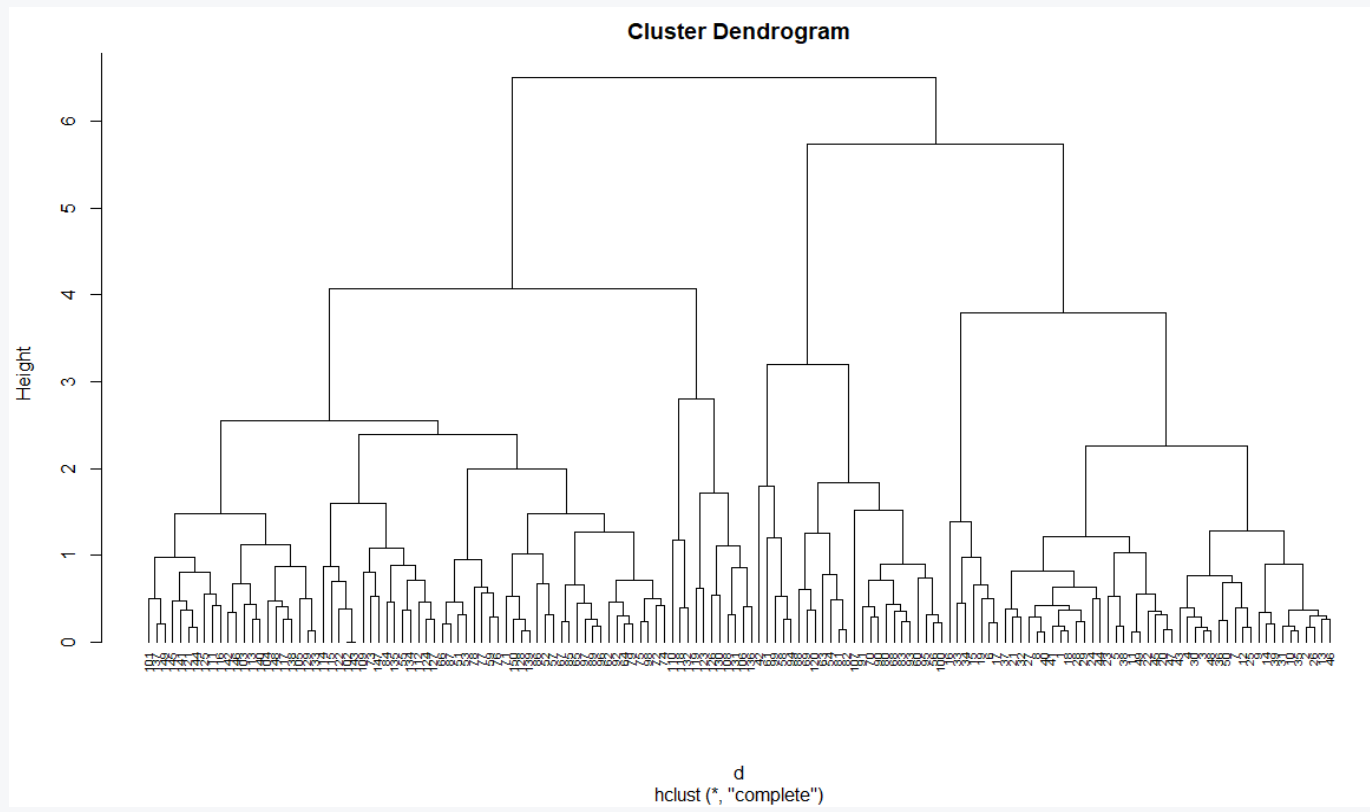
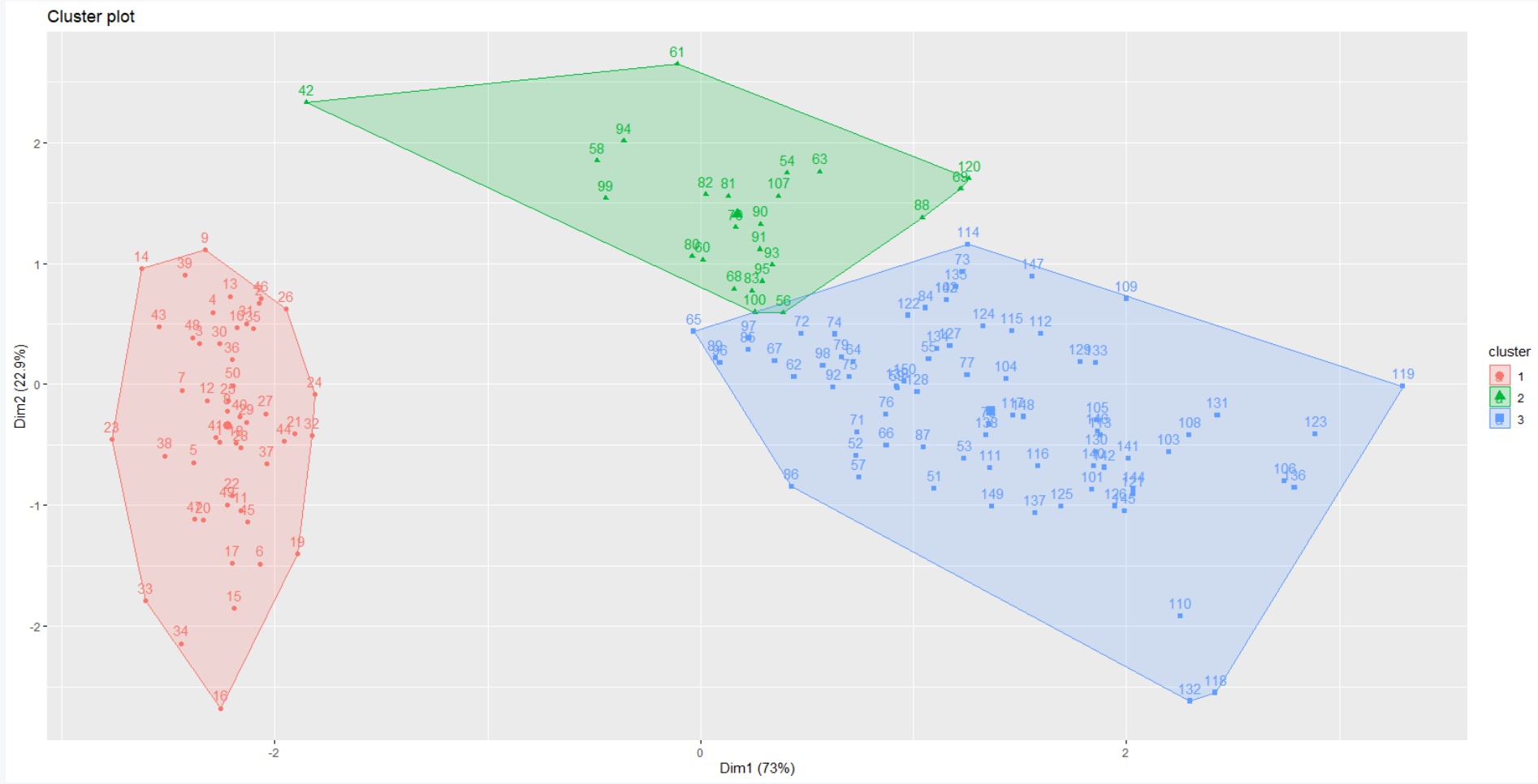
Observe that in the above dendrogram, a leaf corresponds to one observation and as we move up the tree, similar observations are fused at a higher height. The height of the dendrogram determines the clusters. In order to identify the clusters, we can cut the dendrogram with cutree. Then visualize the result in a scatter plot using fviz_cluster function from the factoextra package.
Output:
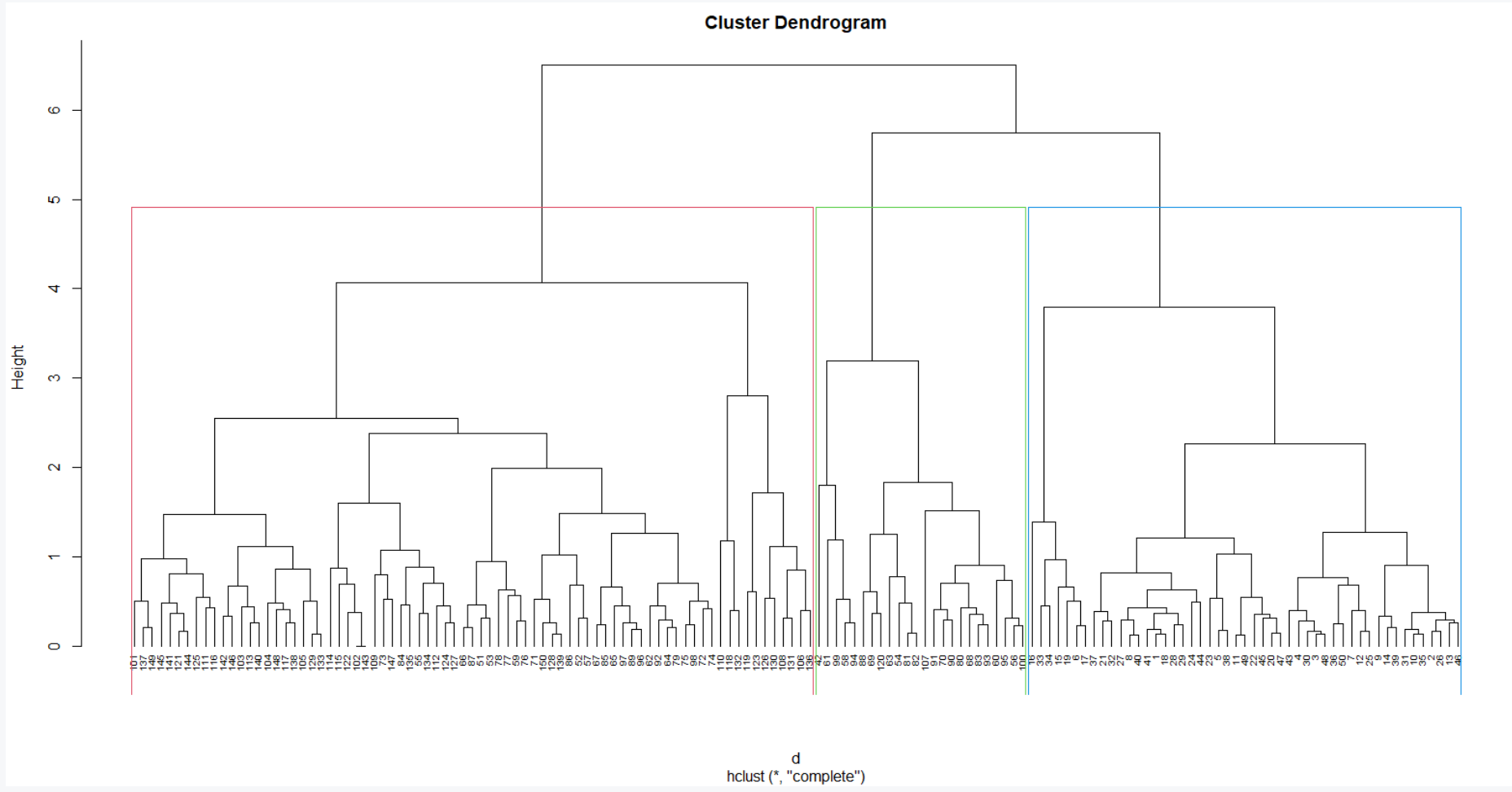
We can also provide a border to the dendrogram around the 3 clusters as shown below.
Output:
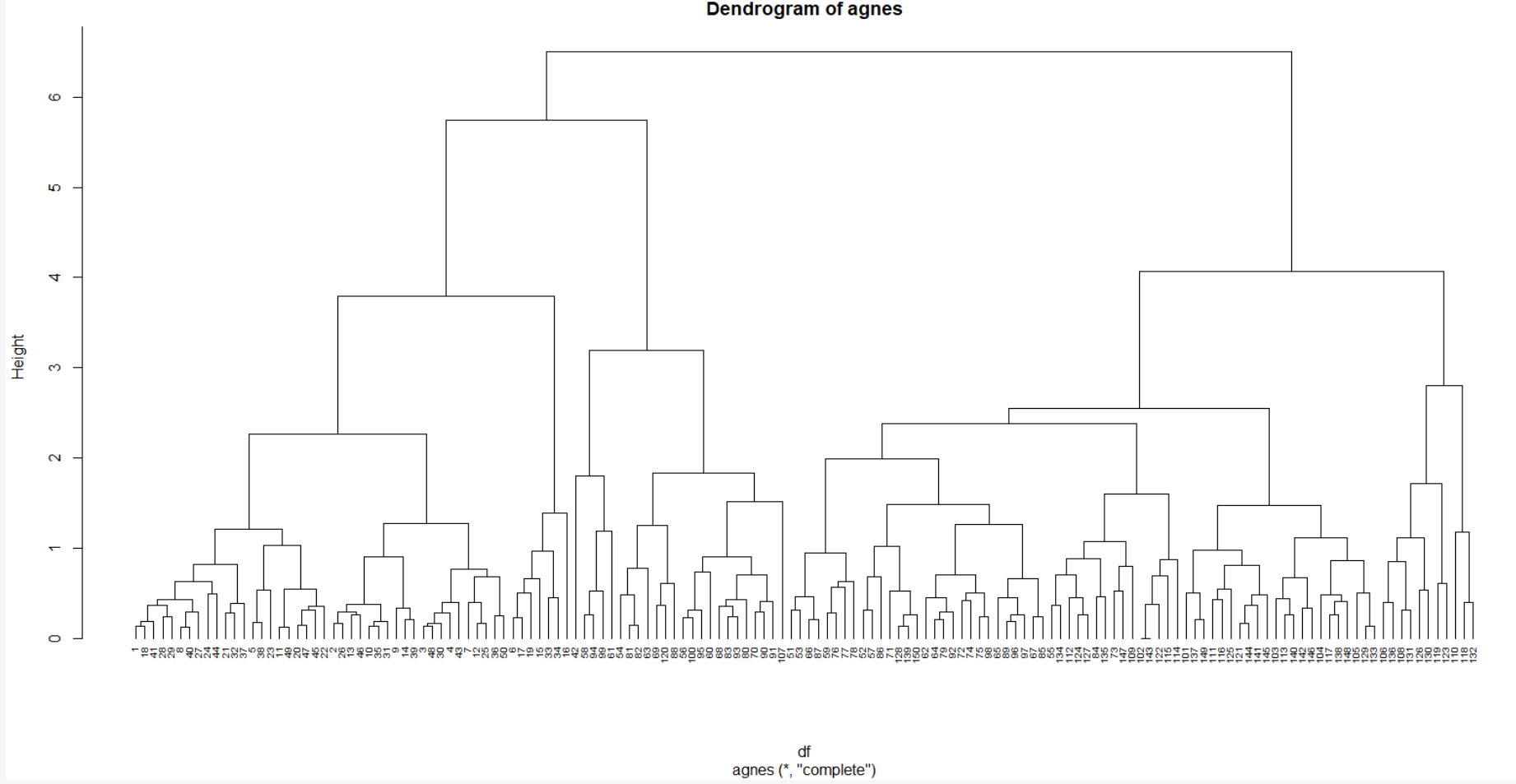
Alternatively, we can use the agnes function to perform the hierarchical clustering. Unlike hclust, the agnes function gives the agglomerative coefficient, which measures the amount of clustering structure found (values closer to 1 suggest strong clustering structure).
Output:
 average single complete
0.9035705 0.8023794 0.9438858
Complete linkage gives a stronger clustering structure. So, we use this agglomeration method to perform hierarchical clustering with agnes function as shown below.
Output:
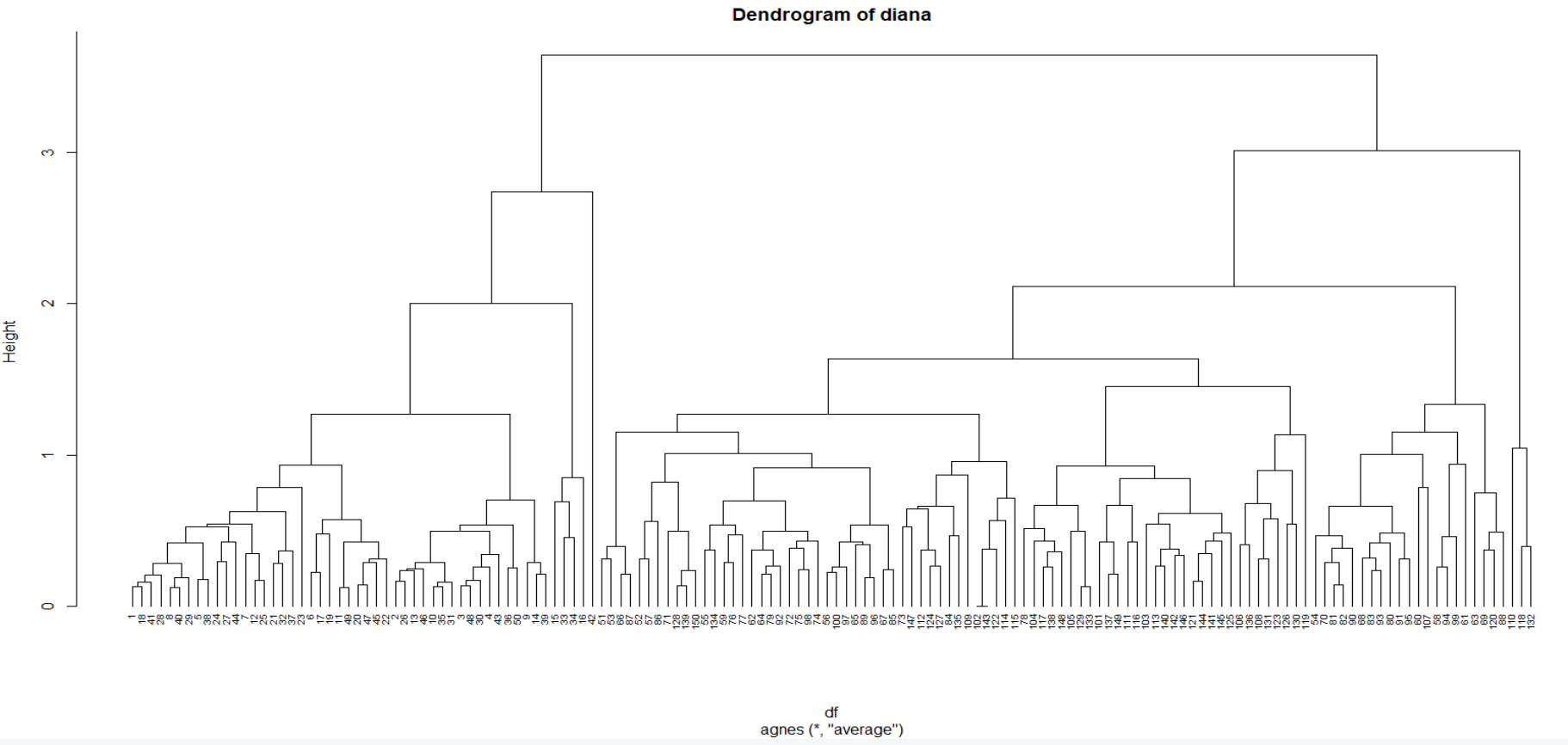
The function diana whichworks similar to agnes allows us to perform divisive hierarchical clustering. However, there is no method to provide.
Output:
[1] 0.9397208