|
VOOZH | about |
|
VOOZH | about |
The dplyr package for R offers efficient data manipulation functions. It makes data transformation and summarization simple with concise, readable syntax.
Here are some important features of dplyr that make working with data easier.
Data frames in dplyr in R is organized tables where each column stores specific types of information, like names, ages, or scores for creating a data frame involves specifying column names and their respective values.
Output:
Note: Tibbles introduced through the tibble package, share similar functionality but offer enhanced user-friendly features. The syntax for creating a tibble is similar to that of a data frame.
%>%)dplyr in R The pipe operator (%>%) in dplyr package, which allows us to chain multiple operations together, improving code readability.
Output:
dplyr in R provides various important functions that can be used for Data Manipulation. These are:
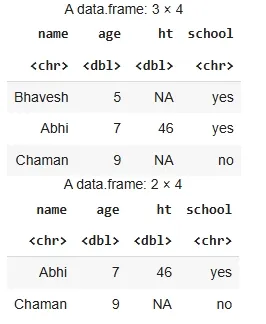
For choosing cases and using their values as a base for doing so.
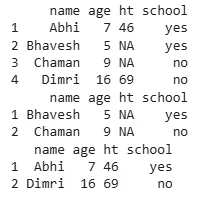
Output:
For reordering of the cases.
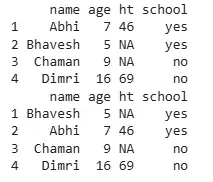
Output:
For choosing variables and using their names as a base for doing so.
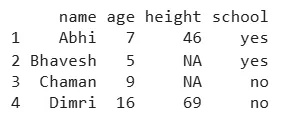
Output:
Addition of new variables which are the functions of prevailing variables.
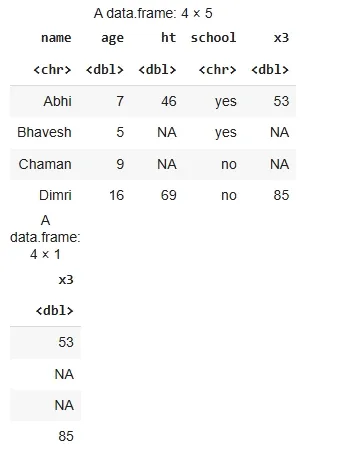
Output:
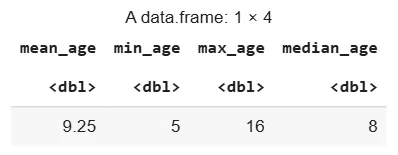
Condensing various values to one value.
Output:
For taking random specimens.
Output: