|
VOOZH | about |
|
VOOZH | about |
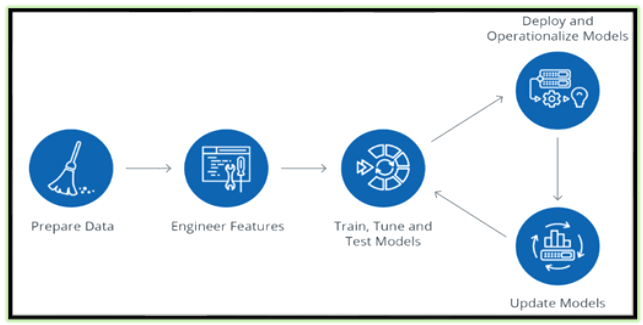
Data Science Lifecycle revolves around using various analytical methods to produce insights and followed by applying Machine Learning Techniques, to do predictions from the collected data from various sources, through that we could achieve major and innovative objectives, challenges and value added solutions for certain business problem statements. The entire process involves several steps like data cleaning, preparation, modelling, model evaluation, etc.
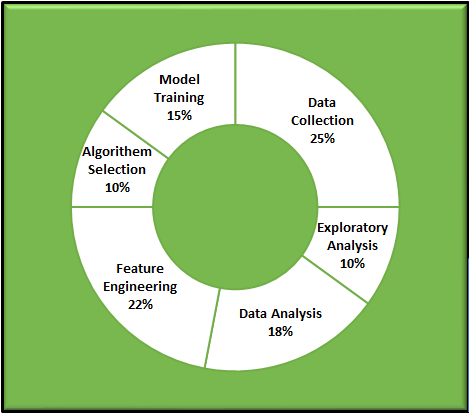
We can segregate the Data Science Life Cycle in % wise as below in the pie chart., So that we could understand better way, how each stage is playing important roles to build the model for prediction or classification.
Based on the nature of the Data and its source, there might be a few changes in %, So it is not necessarily to be stick with this pattern. Hope you understand my point.
Once we understand the nature of the feature engineering process of the given dataset. We are able to extract notable information, insights as mentioned earlier. Absolutely that would help us to use the right algorithms to build the perfect model for the given problem statement and to achieve a successful model.
Under Feature Improvements, We are having so many things to discuss, Here I am picking just Scaling since this involves mathematics and statistics.
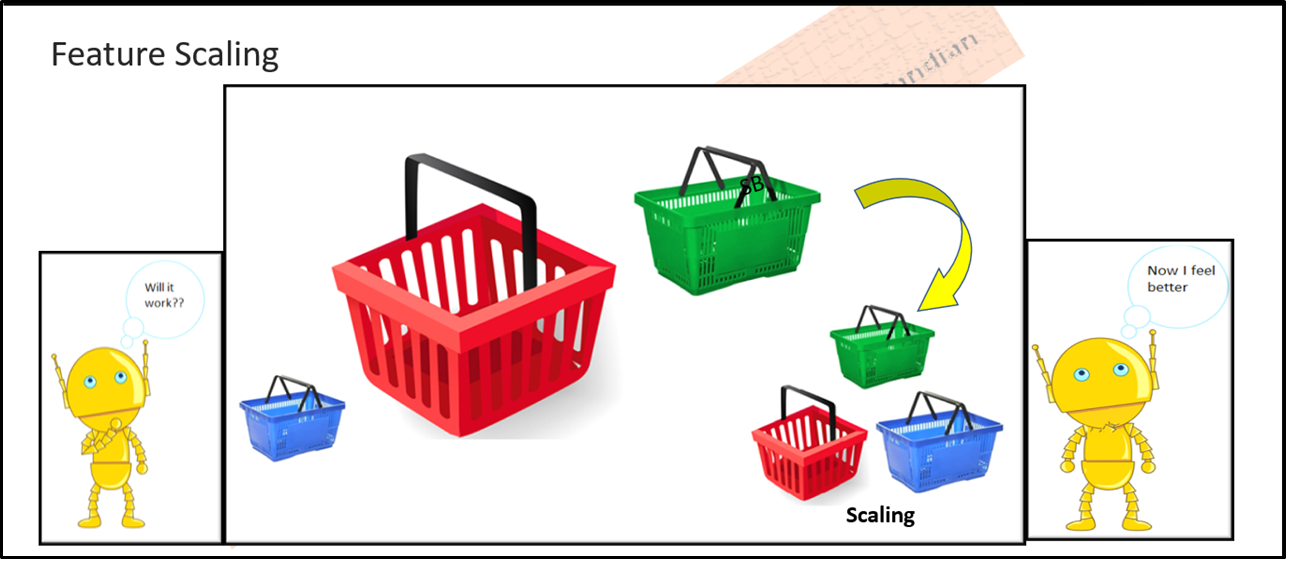
Before applying Machine Learning algorithms to the dataset, We have to carefully understand the magnitude of all key features, which is applicable for feature selection and finding independent and dependent variables. So we have to, scaling them accordingly to accommodate for the analysis and model preparations, the process of adjusting the magnitude of these features is SCALING or Feature Scaling.
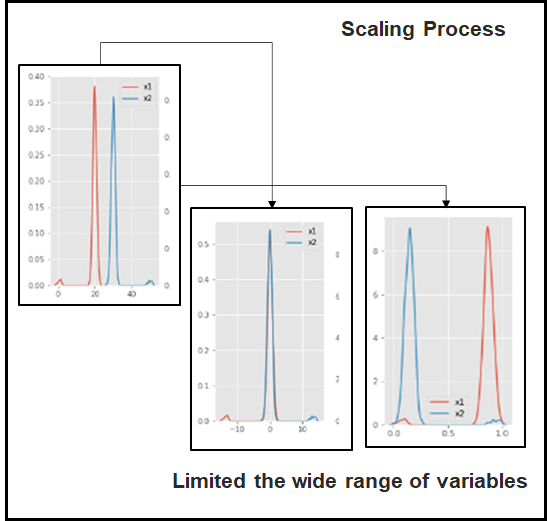
Scaling is an important approach that allows us to limit the wide range of variables in the feature under the certain mathematical approach
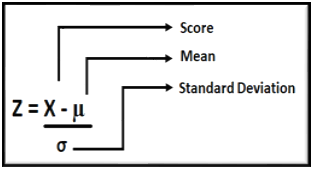
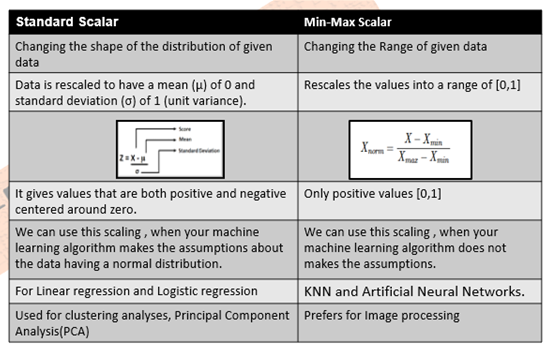
StandardScaler: Standardizes a feature by subtracting the mean and then scaling to unit variance. Unit variance means dividing all the values by the standard
deviation. StandardScaler makes the mean of the distribution 0. About 68% of the values will lie between -1 and 1.
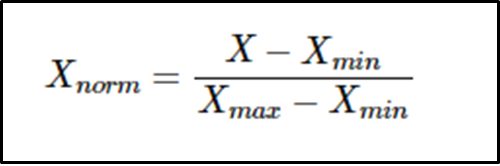
MinMaxScaler/Normalization: Will transform each value in the column proportionally within the range [0,1].Use this as the first scaler choice to transform a feature, as it will preserve the shape of the dataset (no distortion).
Scaling Process
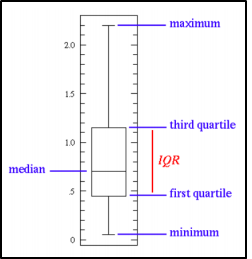
Robust Scalar: Robust Scalar is specifically to handle the outliers. Since other scaling methods are not supported effectively. This method removes the median and scales the data according to the QUANTILE RANGE, from defaults to IQR: Interquartile Range. (Range è 25% – 75%)
The IQR is the range – 1st quartile (25th quantile) and the 3rd quartile (75th quantile). We could see the outliers themselves are still present in the transformed data set.
import numpy as np
from sklearn import preprocessing
data1 = np.array([[-100.3],
[27.5],
[0],
[-200.9],
[1000]])
print('Before Scaling\n',data1)
standard_scaler = preprocessing.StandardScaler()
scaled = standard_scaler.fit_transform(data1)
print('\nAfter standard scaler\n',scaled)
Min-Max Scaler
import numpy as np
from sklearn import preprocessing
data1 = np.array([[-100.3],
[27.5],
[0],
[-200.9],
[1000]])
print('Before scalingn',data1)
minmax_scale = preprocessing.MinMaxScaler(feature_range=(1, 2))
scaled = minmax_scale.fit_transform(data1)
print('nAfter Min-Max Scalern',scaled)
Before scaling
 [[-100.3]
 [ 27.5]
 [ 0. ]
 [-200.9]
 [1000. ]]

After Min-Max Scaler
 [[1.08377051]
 [1.19019069]
 [1.1672912 ]
 [1. ]
 [2. ]]
Robust Scaler
import numpy as np
from sklearn import preprocessing
data1 = np.array([[-100.3],
[27.5],
[0],
[-200.9],
[1000]])
print('Before Scalingn',data1)
robust_scaler = preprocessing.RobustScaler()
scaled = robust_scaler.fit_transform(data1)
print('n After Robust Scalern',scaled)
Before Scaling
 [[-100.3]
 [ 27.5]
 [ 0. ]
 [-200.9]
 [1000. ]]

 After Robust Scaler
 [[-0.78482003]
 [ 0.21517997]
 [ 0. ]
 [-1.57198748]
 [ 7.82472613]]
Feature Engineering itself very vast area, and Feature Improvements, is a subdivision of Feature Engineering and Scaling in a small portion. So try to understand how this topic is very important for Data Scientist and Machine Learning Engineers. Will discuss more in upcoming blogs!
Shanthababu Pandian has over 23 years of IT experience, specializing in data architecting, engineering, analytics, DQ&G, data science, ML, and Gen AI. He holds a BE in electronics and communication engineering and three Master’s degrees (M.Tech, MBA, M.S.) from a prestigious Indian university. He has completed postgraduate programs in AIML from the University of Texas and data science from IIT Guwahati. He is a director of data and AI in London, UK, leading data-driven transformation programs focusing on team building and nurturing AIML and Gen AI. He helps global clients achieve business value through scalable data engineering and AI technologies. He is also a national and international speaker, author, technical reviewer, and blogger.
GPT-4 vs. Llama 3.1 – Which Model is Better?
Llama-3.1-Storm-8B: The 8B LLM Powerhouse Surpa...
A Comprehensive Guide to Building Agentic RAG S...
Top 10 Machine Learning Algorithms in 2026
45 Questions to Test a Data Scientist on Basics...
90+ Python Interview Questions and Answers (202...
8 Easy Ways to Access ChatGPT for Free
Prompt Engineering: Definition, Examples, Tips ...
What is LangChain?
What is Retrieval-Augmented Generation (RAG)?
Well presented,easy to understand,overall very good material. Worth reading.
Machine Learning enables the user to customize the products and make the life easier.
Edit
Resend OTP
Resend OTP in 45s