👁 Image The marked territories on this global map from the United Nations are mostly of countries which are sovereign states with full international recognition (brackets denote the country of a marked territory that is not a sovereign state). Some territories are countries in their own right but are not recognized as such (e.g. Taiwan ), some few marked territories are disputed about which country they belong to (e.g. Kashmir ) or if they are countries in their own right (e.g. Western Sahara (territory) or the state known by the same name ). A country sovereign state . They can also be referred to as states with limited recognition , constituent countries , or dependent territories , with their own government. A country may consist of multiple nations, a structure known as a multinational state . Countries are often distinguished as developing countries or developed countries .
There is no universal agreement on the number of "countries" in the world. This ambiguity is a result of several countries not being recognized as sovereign states by the UN system, but are recognized by at least one UN member, known as "diplomatic recognition '. These countries often have disputed territories and have only partial recognition . A number of entities without recognition are also commonly considered a country.
Areas other than a political entity may be referred to as a "country", such as the West Country in England, "big sky country" (used in various contexts of the American West ), "coal country" (used to describe coal-mining regions ), or simply "the country" (used to describe a rural area ). The term "country" is also used as a qualifier descriptively, such as country music or country living .
The definition and usage of the word "country" has fluctuated and changed over time. The Economist Full article...
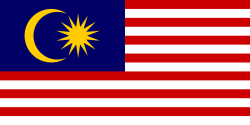
Entries here consist of Good and Featured articles, which meet a core set of high editorial standards. 👁 Image Malaysia Southeast Asia . A federal constitutional monarchy , it consists of 13 states and three federal territories , separated by the South China Sea into two regions: Peninsular Malaysia on the Indochinese Peninsula and East Malaysia on the island of Borneo . Peninsular Malaysia shares land and maritime borders with Thailand , as well as maritime borders with Singapore , Vietnam , and Indonesia ; East Malaysia shares land borders with Brunei and Indonesia, and maritime borders with the Philippines and Vietnam. Kuala Lumpur is the country's national capital, largest city , and the seat of the legislative branch of the federal government , while Putrajaya is the federal administrative capital, representing the seat of both the executive branch and the judicial branch of the federal government. With a population of over 34 million, it is the world's 42nd-most populous country .
The country has its origins in the Malay kingdoms , which, from the 18th century on, became subject to the British Empire , along with the British Straits Settlements protectorate. During World War II , British Malaya , along with other nearby British and American colonies, was occupied by the Empire of Japan . Following three years of occupation, Malaya was briefly unified as the Malayan Union in 1946 until 1948 when it was restructured as the Federation of Malaya . The country achieved independence on 31 August 1957 . On 16 September 1963 , independent Malaya united with the then British crown colonies of North Borneo , Sarawak , and Singapore to become Malaysia. In August 1965, Singapore was separated from the federation and became an independent country . (Full article...
List of Recognized articles
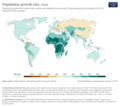
👁 Image World map of Gini coefficients (as a %), 2022, according to the Poverty and Inequality Platform (PIP) <30
30-35
35-40
40-45
45-50
50+
In economics , the Gini coefficient /ˈ dʒ iː n i JEE -neeGini index or Gini ratio , is a measure of statistical dispersion intended to represent the income inequality , the wealth inequality , or the consumption inequality within a nation or a social group . It was developed by Italian statistician and sociologist Corrado Gini .
The Gini coefficient measures the inequality among the values of a frequency distribution , such as income levels. A Gini coefficient of 0 reflects perfect equality, where all income or wealth values are the same. In contrast, a Gini coefficient of 1 (or 100%) reflects maximal inequality among values, where a single individual has all of the income while all others have none. (Full article...
List of selected articles to understand countries
The following are images from various country-related articles on Wikipedia.
Remaining countries not listed in the Recognized articles section at left are displayed here.
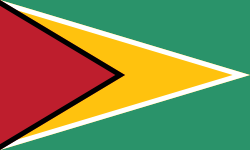
👁 Image Guyana Co-operative Republic of Guyana , is a developing country on the northern coast of South America . It is bordered by the Atlantic Ocean to the north, Suriname to the east, Brazil to the south and southwest, and Venezuela to the west. It is part of The Guianas . The capital and largest city is Georgetown .
With a land area of 214,969 km2 (83,000 sq mi), Guyana is the third-smallest sovereign state by area in mainland South America after Uruguay and Suriname, and is the second-least populous sovereign state in South America after Suriname; it is also one of the least densely populated countries on Earth . The official language of the country is English , although a large part of the population is bilingual in English and the indigenous languages. Guyana is the only country in mainland South America to have English as the official language. The majority of the population also speaks Guyanese Creole , which is an English-based creole . Guyana is part of the Commonwealth Caribbean . It is part of the mainland Caribbean region maintaining strong cultural, historical, and political ties with other Caribbean countries as well as serving as the headquarters for the Caribbean Community (CARICOM). In 2008, the country joined the Union of South American Nations as a founding member. (Full article...
👁 Image 1 The United States of America (USA), also known as the United States (U.S.) or America, is a country primarily located in North America. It is a federal republic of 50 states and a federal capital district, Washington, D.C. The 48 contiguous states border Canada to the north and Mexico to the south, with the semi-exclave of Alaska in the northwest and the archipelago of Hawaii in the Pacific Ocean. The United States also asserts sovereignty over five major island territories and various uninhabited islands in Oceania and the Caribbean. It is a megadiverse country, with the world's third-largest land area and third-largest population, exceeding 341 million. Paleo-Indians first migrated from North Asia to North America at least 15,000 years ago, and formed various civilizations. Spanish colonization established Spanish Florida in 1513, the first European colony in what is now the continental United States. British colonization followed with the 1607 settlement of Virginia, the first of the Thirteen Colonies. Enslavement of Africans was practiced in every colony and supplied most of the labor for the Southern Colonies' plantation economy. Clashes with the British Crown began as a civil protest over the illegality of taxation without representation in Parliament and the denial of other English rights. They evolved into the American Revolution, which led to the Declaration of Independence and a society based on universal rights. Victory in the 1775–1783 Revolutionary War brought international recognition of U.S. sovereignty and fueled westward expansion, further dispossessing native inhabitants. As more states were admitted into the Union, a North–South division over slavery led 11 Southern states to attempt to secede and join as the Confederate States of America, which fought against the Union in the American Civil War of 1861–1865. With the United States' victory and reunification, slavery was abolished nationally. By 1900, the country had established itself as a great power, a status solidified after its involvement in World War I. Following Japan's attack on Pearl Harbor in 1941, the U.S. entered World War II. Its aftermath left the U.S. and the Soviet Union as rival superpowers, competing for ideological dominance and international influence during the Cold War. The collapse of the Soviet Union in 1991 ended the Cold War, leaving the U.S. as the world's sole superpower. After the terror attacks of September 11, 2001, the U.S. launched the war on terror, invading Afghanistan and Iraq. It has continued carrying out numerous foreign interventions since then. The U.S. federal government is a representative democracy with a president and a constitution that creates a separation of powers among three branches: legislative, executive, and judicial. The United States Congress is a bicameral national legislature composed of the House of Representatives (a lower house based on population) and the Senate (an upper house based on equal representation for each state). Federalism grants substantial autonomy to the 50 states. In addition, 574 Native American tribes have sovereignty rights, and there are 326 Native American reservations. Since the 1850s, the Democratic and Republican parties have dominated American politics in a de facto two-party system. American ideals and values are based on a democratic tradition inspired by the American Enlightenment movement. (Full article...) Image 1 The
United States of America (
USA ), also known as the
United States (
U.S. ) or
America , is a country primarily located in
North America . It is a
federal republic of 50
states and a
federal capital district ,
Washington, D.C. The 48
contiguous states border
Canada to the north and
Mexico to the south, with the
semi-exclave of
Alaska in the northwest and the
archipelago of
Hawaii in the
Pacific Ocean . The United States also asserts sovereignty over five
major island territories and
various uninhabited islands in
Oceania and the
Caribbean . It is a
megadiverse country , with the world's
third-largest land area and
third-largest population , exceeding 341 million.
Paleo-Indians first migrated from North Asia to North America at least 15,000 years ago, and formed various civilizations.
Spanish colonization established
Spanish Florida in 1513, the first European colony in what is now the continental United States.
British colonization followed with the 1607 settlement of
Virginia , the first of the
Thirteen Colonies .
Enslavement of Africans was practiced in every colony and supplied most of the labor for the
Southern Colonies '
plantation economy . Clashes with the
British Crown began as
a civil protest over the
illegality of taxation without representation in Parliament and the denial of other
English rights . They evolved into the
American Revolution , which led to the
Declaration of Independence and a society based on
universal rights . Victory in the 1775–1783
Revolutionary War brought international recognition of U.S. sovereignty and fueled
westward expansion , further dispossessing
native inhabitants . As more states were
admitted into the Union , a North–South
division over slavery led 11 Southern states to attempt to secede and join as the
Confederate States of America , which fought against the
Union in the
American Civil War of 1861–1865. With the United States' victory and reunification, slavery was
abolished nationally . By 1900, the country had established itself as a
great power , a status solidified after
its involvement in
World War I . Following
Japan 's
attack on Pearl Harbor in 1941, the U.S.
entered World War II .
Its aftermath left the U.S. and the
Soviet Union as rival
superpowers , competing for
ideological dominance and
international influence during the
Cold War . The
collapse of the Soviet Union in 1991 ended the Cold War, leaving the U.S. as the world's sole superpower. After the
terror attacks of September 11, 2001 , the U.S. launched the
war on terror , invading
Afghanistan and
Iraq . It has continued carrying out
numerous foreign interventions since then.
The
U.S. federal government is a
representative democracy with
a president and
a constitution that creates
a separation of powers among three branches:
legislative ,
executive , and
judicial . The
United States Congress is a
bicameral national legislature composed of the
House of Representatives (a
lower house based on population) and the
Senate (an
upper house based on equal representation for each state).
Federalism grants substantial autonomy to the 50 states. In addition, 574 Native American tribes have
sovereignty rights , and there are 326
Native American reservations . Since the 1850s, the
Democratic and
Republican parties have dominated
American politics in a
de facto two-party system .
American ideals and values are based on a democratic tradition inspired by the
American Enlightenment movement. (
Full article... )
👁 Image 2 Iran, officially the Islamic Republic of Iran, and also known as Persia, is a country in West Asia. It borders Iraq to the west, Turkey, Azerbaijan, and Armenia to the northwest, the Caspian Sea to the north, Turkmenistan to the northeast, Afghanistan to the east, Pakistan to the southeast, and the Gulf of Oman and the Persian Gulf to the south. With a population of over 92 million, Iran ranks 17th globally in both geographic size and population. It is divided into five regions with 31 provinces. Tehran is the nation's capital, largest city, and financial center. Home to one of the world's oldest continuous major civilizations, the territory of present-day Iran was first unified under the Medes in the 7th century BC and reached its territorial height in the 6th century BC, when Cyrus the Great founded the Achaemenid Empire. Alexander the Great conquered the empire in the 4th century BC. An Iranian rebellion in the 3rd century BC established the Parthian Empire, which later liberated the country. In the 3rd century AD, the Parthians were succeeded by the Sasanian Empire, which oversaw a golden age in the history of Iranian civilization. During this period, ancient Iran saw some of the earliest developments of writing, agriculture, urbanization, religion, and administration. Once a center for Zoroastrianism, Iran underwent Islamization following the 7th century Muslim conquest. Innovations in literature, philosophy, mathematics, medicine, astronomy and art were renewed during the Islamic Golden Age and Iranian Intermezzo, a period during which Iranian Muslim dynasties ended Arab rule and revived the Persian language. This era was followed by Seljuk and Khwarazmian rule, Mongol conquests and the Timurid Renaissance from the 11th to 14th centuries. In the 16th century, the native Safavid dynasty re-established a unified Iranian state with Twelver Shia Islam as the official religion, laying the framework for the modern state of Iran. During the Afsharid Empire in the 18th century, Iran was a leading world power, but it lost this status after the Qajars took power in the 1790s. The early 20th century saw the Persian Constitutional Revolution and the establishment of the Pahlavi dynasty by Reza Shah, who ousted the last Qajar Shah in 1925. Following the Anglo-Soviet invasion of Iran in 1941, his son Mohammad Reza Pahlavi rose to power. Attempts by Mohammad Mosaddegh to nationalize the oil industry led to the Anglo-American coup in 1953. The Iranian Revolution in 1979 overthrew the monarchy, and the Islamic Republic of Iran was established by Ruhollah Khomeini, the country's first supreme leader. In 1980, Iraq invaded Iran, sparking the eight-year-long Iran–Iraq War, which ended in a stalemate. Iran has since been involved in proxy wars with Israel and Saudi Arabia; in June 2025, Israeli strikes on Iran escalated tensions into the Twelve-Day War. Following the war and amid a growing economic crisis, the largest protests since 1979 erupted in late December 2025. The United States and Israel launched a major attack on Iran in late February 2026, where regional strikes across West Asia have occurred since the aforementioned attacks. Mojtaba Khamenei became the country's new supreme leader in March 2026 following the assassination of his father, Ali Khamenei, in those strikes. (Full article...) Image 2 Iran , officially the
Islamic Republic of Iran , and also known as
Persia , is a country in
West Asia . It borders
Iraq to the west,
Turkey ,
Azerbaijan , and
Armenia to the northwest, the
Caspian Sea to the north,
Turkmenistan to the northeast,
Afghanistan to the east,
Pakistan to the southeast, and the
Gulf of Oman and the
Persian Gulf to the south. With a population of over 92 million, Iran ranks 17th globally in both
geographic size and
population . It is divided into
five regions with
31 provinces .
Tehran is the nation's
capital ,
largest city , and
financial center .
Home to one of the world's oldest continuous major civilizations, the territory of present-day Iran was first unified under the
Medes in the 7th century BC and reached its territorial height in the 6th century BC, when
Cyrus the Great founded the
Achaemenid Empire .
Alexander the Great conquered the empire in the 4th century BC. An Iranian rebellion in the 3rd century BC established the
Parthian Empire , which later liberated the country. In the 3rd century AD, the Parthians were succeeded by the
Sasanian Empire , which oversaw a golden age in the
history of Iranian civilization . During this period, ancient Iran saw some of the earliest developments of writing, agriculture, urbanization, religion, and administration. Once a center for
Zoroastrianism , Iran underwent
Islamization following the
7th century Muslim conquest . Innovations in
literature ,
philosophy , mathematics,
medicine , astronomy and
art were renewed during the
Islamic Golden Age and
Iranian Intermezzo , a period during which
Iranian Muslim dynasties ended Arab rule and revived the
Persian language . This era was followed by
Seljuk and
Khwarazmian rule,
Mongol conquests and the
Timurid Renaissance from the 11th to 14th centuries.
In the 16th century, the native
Safavid dynasty re-established a unified Iranian state with
Twelver Shia Islam as the
official religion , laying the framework for the modern state of Iran. During the
Afsharid Empire in the 18th century, Iran was a leading world power, but it lost this status after the
Qajars took power in the 1790s. The early 20th century saw the
Persian Constitutional Revolution and the establishment of the
Pahlavi dynasty by
Reza Shah , who ousted the last Qajar Shah in 1925. Following the
Anglo-Soviet invasion of Iran in 1941 , his son
Mohammad Reza Pahlavi rose to power. Attempts by
Mohammad Mosaddegh to
nationalize the oil industry led to the
Anglo-American coup in 1953 . The
Iranian Revolution in 1979 overthrew the monarchy, and the Islamic Republic of Iran was established by
Ruhollah Khomeini , the country's first
supreme leader . In 1980,
Iraq invaded Iran , sparking the eight-year-long
Iran–Iraq War , which ended in a stalemate. Iran has since been involved in
proxy wars with
Israel and
Saudi Arabia ; in June 2025, Israeli strikes on Iran escalated tensions into the
Twelve-Day War . Following the war and amid a
growing economic crisis , the
largest protests since 1979 erupted in late December 2025. The
United States and
Israel launched a
major attack on Iran in late February 2026, where regional strikes across West Asia have occurred since the aforementioned attacks.
Mojtaba Khamenei became the country's new supreme leader in March 2026 following
the assassination of his father,
Ali Khamenei , in those strikes. (
Full article... )
👁 Image 3 The United Kingdom of Great Britain and Northern Ireland, commonly known as the United Kingdom (UK) or Britain, is a country in northwestern Europe, off the coast of the continental mainland. It comprises England, Scotland, Wales and Northern Ireland, with a population of over 69 million in 2024. The UK includes the island of Great Britain, the north-eastern part of the island of Ireland, and most of the smaller islands within the British Isles, covering 94,354 square miles (244,376 km2). It shares a land border with the Republic of Ireland and is surrounded by the Atlantic Ocean, the North Sea, the English Channel, the Celtic Sea and the Irish Sea, while maintaining sovereignty over the Crown Dependencies and the British Overseas Territories. The capital and largest city of England and the UK is London; Edinburgh, Cardiff and Belfast are the national capitals of Scotland, Wales and Northern Ireland. Britain has been continuously inhabited since the Neolithic. In AD 43 the Roman conquest of Britain began. The Roman departure between 383 and 410 was followed by Anglo-Saxon settlement beginning around 450. In 1066 the Normans conquered England. Over the 17th century the role of the British monarchy was reduced, particularly as a result of the English Civil War. In 1707 the Kingdom of England and the Kingdom of Scotland united under the Treaty of Union to create the Kingdom of Great Britain. The Acts of Union 1800 incorporated the Kingdom of Ireland to create the United Kingdom of Great Britain and Ireland in 1801. Most of Ireland seceded from the UK in 1922 as the Irish Free State, and the Royal and Parliamentary Titles Act 1927 created the present United Kingdom. The UK became the first industrialised country and was the world's foremost power for the majority of the 19th and early 20th centuries, particularly during the Pax Britannica between 1815 and 1914. The British Empire was the leading economic power for most of the 19th century, a position supported by its agricultural prosperity, its role as a dominant trading nation, a massive industrial capacity, significant technological achievements, and the rise of 19th-century London as the world's principal financial centre. At its height in the 1920s, the empire encompassed around a quarter of the world's landmass and population, and was the largest in history. However, its involvement in the First World War and in the Second World War damaged Britain's economic power, and a global wave of decolonisation led to the independence of most British colonies. (Full article...) Image 3 The
United Kingdom of Great Britain and Northern Ireland , commonly known as the
United Kingdom (
UK ) or
Britain , is a country in
northwestern Europe , off the coast of
the continental mainland . It comprises
England ,
Scotland ,
Wales and
Northern Ireland , with a population of over 69 million in 2024. The UK includes the island of
Great Britain , the north-eastern part of the island of
Ireland , and most of
the smaller islands within the
British Isles , covering 94,354 square miles (244,376 km
2 ). It shares
a land border with the
Republic of Ireland and is surrounded by the
Atlantic Ocean , the
North Sea , the
English Channel , the
Celtic Sea and the
Irish Sea , while maintaining sovereignty over the
Crown Dependencies and the
British Overseas Territories . The capital and largest city of England and the UK is
London ;
Edinburgh ,
Cardiff and
Belfast are the national capitals of Scotland, Wales and Northern Ireland.
Britain has been continuously inhabited since the
Neolithic . In AD 43 the
Roman conquest of Britain began. The
Roman departure between 383 and 410 was followed by
Anglo-Saxon settlement beginning around 450. In 1066 the
Normans conquered England . Over the 17th century the role of the
British monarchy was reduced, particularly as a result of the
English Civil War . In 1707 the Kingdom of England and the
Kingdom of Scotland united under the
Treaty of Union to create the
Kingdom of Great Britain . The
Acts of Union 1800 incorporated the
Kingdom of Ireland to create the
United Kingdom of Great Britain and Ireland in 1801. Most of Ireland
seceded from the UK in 1922 as the
Irish Free State , and the
Royal and Parliamentary Titles Act 1927 created the present United Kingdom.
The UK
became the first industrialised country and was the world's
foremost power for the majority of the 19th and early 20th centuries, particularly during the
Pax Britannica between 1815 and 1914. The
British Empire was the leading
economic power for most of the 19th century, a position supported by
its agricultural prosperity , its role as a dominant
trading nation , a massive industrial capacity,
significant technological achievements , and the rise of
19th-century London as the world's principal financial centre. At its height in the 1920s, the empire encompassed around a quarter of the world's landmass and population, and was the
largest in history . However,
its involvement in the First World War and
in the Second World War damaged
Britain's economic power , and a global wave of
decolonisation led to the independence of most British colonies. (
Full article... )
👁 Image 4 India, officially the Republic of India, is a country in South Asia. It is the seventh-largest country by area; the most populous country since 2023; and, since its independence in 1947, the world's most populous democracy. Bounded by the Indian Ocean on the south, the Arabian Sea on the southwest, and the Bay of Bengal on the southeast, it shares land borders with Pakistan to the west; China, Nepal, and Bhutan to the north; and Bangladesh and Myanmar to the east. In the Indian Ocean, India is near Sri Lanka and the Maldives. Its Andaman and Nicobar Islands share a maritime border with Myanmar, Thailand, and Indonesia. Modern humans arrived on the Indian subcontinent from Africa no later than 55,000 years ago. Their long occupation, predominantly in isolation as hunter-gatherers, has made the region highly diverse. Settled life emerged on the subcontinent in the western margins of the Indus river basin 9,000 years ago, evolving gradually into the Indus Valley Civilisation of the third millennium BCE. By 1200 BCE, an archaic form of Sanskrit, an Indo-European language, had diffused into India from the northwest. Its hymns recorded the early dawnings of Hinduism in India. India's pre-existing Dravidian languages were supplanted in the northern regions. By 400 BCE, caste had emerged within Hinduism, and Buddhism and Jainism had arisen, proclaiming social orders unlinked to heredity. Early political consolidations gave rise to the loose-knit Maurya and Gupta Empires. During this era, there was a flourishing of creativity in art, architecture, and writing, the status of women declined, and untouchability became an organised belief. In South India, the Middle kingdoms exported Dravidian language scripts and religious cultures to the kingdoms of Southeast Asia. In the 1st millennium, Islam, Christianity, Judaism, and Zoroastrianism became established on India's southern and western coasts. In the early centuries of the 2nd millennium Muslim armies from Central Asia intermittently overran India's northern plains. The resulting Delhi Sultanate drew northern India into the cosmopolitan networks of medieval Islam. In south India, the Vijayanagara Empire created a long-lasting composite Hindu culture. In the Punjab, Sikhism emerged, rejecting institutionalised religion. The Mughal Empire ushered in two centuries of economic expansion and relative peace, and left a rich architectural legacy. Gradually expanding rule of the British East India Company turned India into a colonial economy but consolidated its sovereignty. British Crown rule began in 1858. The rights promised to Indians were granted slowly, but technological changes were introduced, and modern ideas of education and the public life took root. A nationalist movement emerged in India, the first in the non-European British Empire and an influence on other nationalist movements. Noted for nonviolent resistance after 1920, it became the primary factor in ending British rule. In 1947, the British Indian Empire was partitioned into two independent dominions, a Hindu-majority dominion of India and a Muslim-majority dominion of Pakistan. A large-scale loss of life and an unprecedented migration accompanied the partition. (Full article...) Image 4 India , officially the
Republic of India , is a country in
South Asia . It is the
seventh-largest country by area ; the
most populous country since 2023; and, since its independence in 1947, the world's most populous democracy. Bounded by the
Indian Ocean on the south, the
Arabian Sea on the southwest, and the
Bay of Bengal on the southeast, it shares land borders with
Pakistan to the west;
China ,
Nepal , and
Bhutan to the north; and
Bangladesh and
Myanmar to the east. In the
Indian Ocean , India is near
Sri Lanka and the
Maldives . Its
Andaman and Nicobar Islands share a
maritime border with Myanmar,
Thailand , and
Indonesia .
Modern humans arrived on the
Indian subcontinent from
Africa no later than 55,000 years ago. Their long occupation, predominantly in isolation as hunter-gatherers, has made the region highly diverse.
Settled life emerged on the subcontinent in the western margins of the
Indus river basin 9,000 years ago, evolving gradually into the
Indus Valley Civilisation of the third millennium BCE. By 1200
BCE , an
archaic form of
Sanskrit , an
Indo-European language , had
diffused into India from the northwest.
Its hymns recorded the
early dawnings of
Hinduism in India. India's pre-existing
Dravidian languages were supplanted in the northern regions. By 400
BCE ,
caste had emerged within Hinduism, and
Buddhism and
Jainism had arisen, proclaiming
social orders unlinked to heredity. Early political consolidations gave rise to the loose-knit
Maurya and
Gupta Empires . During this era, there was a flourishing of creativity in art, architecture, and writing, the status of women declined, and
untouchability became an organised belief. In
South India , the
Middle kingdoms exported Dravidian language scripts and religious cultures to the kingdoms of
Southeast Asia .
In the
1st millennium ,
Islam ,
Christianity ,
Judaism , and
Zoroastrianism became established on India's southern and western coasts. In the early centuries of the
2nd millennium Muslim armies from
Central Asia intermittently overran India's northern plains. The resulting
Delhi Sultanate drew northern India into the cosmopolitan
networks of medieval Islam . In south India, the
Vijayanagara Empire created a long-lasting composite Hindu culture. In the
Punjab ,
Sikhism emerged, rejecting institutionalised religion. The
Mughal Empire ushered in two centuries of economic expansion and relative peace, and left
a rich architectural legacy . Gradually expanding
rule of the British East India Company turned India into a colonial economy but consolidated its
sovereignty .
British Crown rule began in 1858. The rights promised to Indians were granted slowly, but
technological changes were introduced, and modern ideas of education and the public life took root.
A nationalist movement emerged in India, the first in the non-European
British Empire and an influence on other nationalist movements. Noted for nonviolent resistance after 1920, it became the primary factor in ending British rule. In 1947, the
British Indian Empire was
partitioned into two independent
dominions , a Hindu-majority
dominion of India and a Muslim-majority
dominion of Pakistan . A large-scale loss of life and an unprecedented migration accompanied the partition. (
Full article... )
Image 5 Gross domestic product (GDP) is the
market value of all final goods and services from a nation in a given year. Countries are sorted by nominal GDP estimates from financial and statistical institutions, which are calculated at market or government official
exchange rates . Nominal GDP does not take into account differences in the
cost of living in different countries, and the results can vary greatly from one year to another based on fluctuations in the exchange rates of the country's
currency . Such fluctuations may change a country's ranking from one year to the next, even though they often make little or no difference in the standard of living of its population.
Comparisons of national wealth are also frequently made based on
purchasing power parity (PPP), to adjust for differences in the cost of living in different countries. Other metrics,
nominal GDP per capita and a corresponding
GDP (PPP) per capita , are used for comparing national
standard of living . On the whole, PPP per capita figures are less spread than nominal GDP per capita figures.
The rankings of national economies have changed significantly over time. For instance, the United States overtook the British Empire around 1916; Japan rose rapidly in the post-World War II period to become the world’s second-largest economy by the 1970s; China moved from ninth place in 1978 to second in 2010 following market reforms. These shifts reflect long-term changes in global economic output. (
Full article... )
👁 Image 6 The Czech Republic, also known as Czechia and historically known as Bohemia, is a landlocked country in Central Europe. The country is bordered by Austria to the south, Germany to the west, Poland to the northeast, and Slovakia to the southeast. The Czech Republic has a hilly landscape that covers an area of 78,871 square kilometers (30,452 sq mi) with a mostly temperate continental and oceanic climate. The capital and largest city is Prague; other major cities and urban areas include Brno, Ostrava, Plzeň and Liberec. The Duchy of Bohemia was founded in the late 9th century under Great Moravia. It was formally recognized as an Imperial Estate of the Holy Roman Empire in 1002 and became a kingdom in 1198. Following the Battle of Mohács in 1526, all of the Lands of the Bohemian Crown were gradually integrated into the Habsburg monarchy. Nearly a hundred years later, the Protestant Bohemian Revolt led to the Thirty Years' War. After the Battle of White Mountain, the Habsburgs consolidated their rule. With the dissolution of the Holy Roman Empire in 1806, the Crown lands became part of the Austrian Empire. During the 19th century, the Czech lands underwent significant industrialization. Following the collapse of Austria-Hungary after World War I, most of the region became part of the First Czechoslovak Republic in 1918. Czechoslovakia was the only country in Central and Eastern Europe to remain a parliamentary democracy during the entirety of the interwar period. After the Munich Agreement in 1938, Nazi Germany systematically took control over the Czech lands. Czechoslovakia was restored in 1945 and three years later became an Eastern Bloc communist state following a coup d'état in 1948. Attempts to liberalize the government and economy were suppressed by a Soviet-led invasion of the country during the Prague Spring in 1968. In November 1989, the Velvet Revolution ended communist rule in the country and restored democracy. On 31 December 1992, Czechoslovakia was peacefully dissolved, with its constituent states becoming the independent states of the Czech Republic and Slovakia. (Full article...) Image 6 The
Czech Republic , also known as
Czechia and historically known as
Bohemia , is a
landlocked country in
Central Europe . The country is bordered by
Austria to the south,
Germany to the west,
Poland to the northeast, and
Slovakia to the southeast. The Czech Republic has a hilly landscape that covers an area of 78,871 square kilometers (30,452 sq mi) with a mostly temperate
continental and
oceanic climate . The capital and largest city is
Prague ; other major cities and urban areas include
Brno ,
Ostrava ,
Plzeň and
Liberec .
The
Duchy of Bohemia was founded in the late 9th century under
Great Moravia . It was formally recognized as an
Imperial Estate of the
Holy Roman Empire in 1002 and became
a kingdom in 1198. Following the
Battle of Mohács in 1526, all of the
Lands of the Bohemian Crown were gradually integrated into the
Habsburg monarchy . Nearly a hundred years later, the
Protestant Bohemian Revolt led to the
Thirty Years' War . After the
Battle of White Mountain , the Habsburgs consolidated their rule. With the dissolution of the Holy Roman Empire in 1806, the Crown lands became part of the
Austrian Empire .
During the 19th century, the
Czech lands underwent significant industrialization. Following the collapse of
Austria-Hungary after
World War I , most of the region became part of the
First Czechoslovak Republic in 1918. Czechoslovakia was the only country in Central and Eastern Europe to remain a
parliamentary democracy during the entirety of the
interwar period . After the
Munich Agreement in 1938,
Nazi Germany systematically
took control over the Czech lands.
Czechoslovakia was restored in 1945 and three years later became an
Eastern Bloc communist state following a
coup d'état in 1948. Attempts to liberalize the government and economy were suppressed by a
Soviet -led invasion of the country during the
Prague Spring in 1968. In November 1989, the
Velvet Revolution ended communist rule in the country and restored
democracy . On 31 December 1992,
Czechoslovakia was peacefully dissolved , with its constituent states becoming the independent states of the Czech Republic and Slovakia. (
Full article... )
👁 Image 7 China, officially the People's Republic of China (PRC), is a country in East Asia. It is the second-most populous country after India, with a population exceeding 1.4 billion, representing 17% of the world's population. China borders fourteen countries by land across an area of 9.6 million square kilometers (3,700,000 sq mi), making it the third-largest country by area. The country is divided into 33 province-level divisions: 22 provinces, 5 autonomous regions, 4 municipalities, and 2 semi-autonomous special administrative regions. Beijing is the capital, while Shanghai is the most populous city by urban area and largest financial center. The first humans in China arrived during the Paleolithic era. By the 2nd millennium BCE dynastic states had emerged in the Yellow River basin. The 8th–3rd centuries BCE saw a breakdown in the authority of the Zhou dynasty, accompanied by the emergence of administrative and military techniques, literature and philosophy. In 221 BCE, China was unified under an emperor, ushering in two millennia of imperial rule. Chinese achievements include the invention of gunpowder, paper, printing and the compass, the establishment of the Silk Road, and the building of the Great Wall. Chinese culture has flourished and has had a great influence on the region and beyond. China began to cede parts of the country in the 19th century, to European powers through a series of unequal treaties. The 1911 Revolution overthrew the Qing dynasty and the Republic of China was established the following year. The country was unstable and fragmented during the Warlord Era, this came to an end with the Northern Expedition conducted by the Kuomintang to reunify the country. The Chinese Civil War began in 1927, when Kuomintang forces purged members of the Chinese Communist Party (CCP). China was invaded by the Empire of Japan in 1937, leading the CCP and Kuomintang to form the Second United Front to fight the Japanese. The Second Sino-Japanese War ended in a Chinese victory; however, the CCP and the Kuomintang resumed their civil war. In 1949, the CCP proclaimed the People's Republic of China and forced the Kuomintang-led government to retreat to the island of Taiwan. The country was split, with both sides claiming to be the legitimate government. Following the implementation of land reforms, attempts by the CCP to realize communism failed: the Great Leap Forward was responsible for the Great Chinese Famine which resulted in millions of deaths, and the Cultural Revolution was a period of turmoil and persecution. The reform and opening up that began in 1978 moved the country away from a planned economy towards a market-based economy, spurring an economic boom. A movement for political liberalization stalled after the 1989 Tiananmen Square protests and massacre. (Full article...) Image 7 China , officially the
People's Republic of China (
PRC ), is a country in
East Asia . It is the
second-most populous country after India, with
a population exceeding 1.4 billion, representing 17% of the world's population. China
borders fourteen countries by land across an area of 9.6 million square kilometers (3,700,000 sq mi), making it the
third-largest country by area . The country is divided into 33
province-level divisions : 22
provinces , 5
autonomous regions , 4
municipalities , and 2 semi-autonomous
special administrative regions .
Beijing is the capital, while
Shanghai is the
most populous city by urban area and largest
financial center .
The first humans in China arrived during the
Paleolithic era. By the 2nd millennium BCE
dynastic states had emerged in the
Yellow River basin. The 8th–3rd centuries BCE saw a breakdown in the authority of the
Zhou dynasty , accompanied by the emergence of administrative and military techniques,
literature and
philosophy . In 221 BCE, China was unified under
an emperor , ushering in two millennia of imperial rule. Chinese achievements include the invention of
gunpowder ,
paper ,
printing and the
compass , the establishment of the
Silk Road , and the building of the
Great Wall .
Chinese culture has flourished and has had a great influence on the
region and beyond . China began to cede
parts of the country in the 19th century, to European powers through a series of
unequal treaties . The
1911 Revolution overthrew the
Qing dynasty and the
Republic of China was established the following year. The country was unstable and fragmented during the
Warlord Era , this came to an end with the
Northern Expedition conducted by the
Kuomintang to reunify the country.
The
Chinese Civil War began in 1927, when Kuomintang forces
purged members of the
Chinese Communist Party (CCP). China was invaded by the
Empire of Japan in 1937, leading the CCP and Kuomintang to form the
Second United Front to fight the Japanese. The
Second Sino-Japanese War ended in a Chinese victory; however, the CCP and the Kuomintang resumed their civil war. In 1949, the CCP
proclaimed the People's Republic of China and forced the
Kuomintang-led government to retreat to the
island of Taiwan . The country was split, with
both sides claiming to be the
legitimate government . Following the implementation of
land reforms , attempts by the CCP to realize
communism failed: the
Great Leap Forward was responsible for the
Great Chinese Famine which resulted in millions of deaths, and the
Cultural Revolution was a period of turmoil and persecution. The
reform and opening up that began in 1978 moved the country away from a
planned economy towards a
market-based economy , spurring an economic boom. A movement for political liberalization stalled after the
1989 Tiananmen Square protests and massacre . (
Full article... )
👁 Image 8 Israel, officially the State of Israel, is a country in the Southern Levant region of West Asia. It is bordered by Lebanon to the north, Syria to the northeast, Jordan to the east, and Egypt to the southwest. Israel occupies the West Bank and the Gaza Strip of the Palestinian territories, as well as the Syrian Golan Heights. Israel's western coast lies on the Mediterranean Sea, its southern tip reaches the Red Sea, and to the east is Earth's lowest point near the Dead Sea. Jerusalem is the government seat and proclaimed capital, while Tel Aviv is Israel's largest urban area and economic centre. The Land of Israel, also called Palestine or the Holy Land, was home to the ancient Canaanites and later the kingdoms of Israel and Judah and Hasmonean Judea. Located near continental crossroads, its demographics shifted under various empires. 19th-century European antisemitism fuelled the Zionist movement for a Jewish homeland, which gained British support with the 1917 Balfour Declaration. After World War I, Britain occupied the region and established Mandatory Palestine. British rule and Jewish immigration in the leadup to the Holocaust intensified Arab-Jewish tensions, which escalated into a civil war after the 1947 United Nations (UN) Partition Plan. Israel declared independence as the British Mandate ended on 14 May 1948, followed by an invasion by Arab states. The 1949 armistice expanded Israel beyond the UN plan, while no new Arab state was created, leaving Gaza under Egyptian control and the West Bank ruled by Jordan. Most Palestinian Arabs fled or were expelled during the Nakba, while Israeli independence prompted antisemitism in the Arab world and Jewish exodus therefrom, mainly to Israel. After the 1967 Six-Day War, Israel occupied the West Bank, Gaza and Egyptian Sinai, and annexed East Jerusalem and the Syrian Golan Heights. Peace treaties were signed with Egypt in 1979 (the Sinai being returned in 1982) and Jordan in 1994. The 1993 Oslo Accords introduced limited Palestinian self-rule in the West Bank and Gaza, while the 2020 Abraham Accords normalised ties with more Arab states, but the Israeli–Palestinian conflict persists. Israeli occupation of the Palestinian territories has drawn international criticism, with experts calling its actions war crimes and crimes against humanity. After the Hamas-led October 7 attacks, Israel began committing genocide against Palestinians in Gaza. Israel and several other countries, including the United States, reject that Israel's actions constitute genocide. (Full article...) Image 8 Israel , officially the
State of Israel , is a country in the
Southern Levant region of
West Asia . It is
bordered by
Lebanon to the north,
Syria to the northeast,
Jordan to the east, and
Egypt to the southwest. Israel
occupies the West Bank and the
Gaza Strip of the
Palestinian territories , as well as the Syrian
Golan Heights .
Israel's western coast lies on the
Mediterranean Sea , its southern tip reaches the
Red Sea , and to the east is
Earth's lowest point near the
Dead Sea .
Jerusalem is the government seat and
proclaimed capital , while
Tel Aviv is Israel's
largest urban area and
economic centre .
The
Land of Israel , also called
Palestine or the
Holy Land , was home to the ancient
Canaanites and later the kingdoms of
Israel and Judah and
Hasmonean Judea . Located near
continental crossroads , its
demographics shifted under various empires. 19th-century
European antisemitism fuelled the
Zionist movement for a
Jewish homeland , which gained
British support with the 1917
Balfour Declaration . After
World War I , Britain occupied the region and established
Mandatory Palestine . British rule and
Jewish immigration in the leadup to the
Holocaust intensified
Arab-Jewish tensions , which escalated into
a civil war after the 1947
United Nations (UN)
Partition Plan .
Israel
declared independence as the
British Mandate ended on 14 May 1948, followed by an
invasion by
Arab states . The
1949 armistice expanded Israel beyond the UN plan, while no new Arab state was created, leaving
Gaza under Egyptian control and the
West Bank ruled by Jordan . Most
Palestinian Arabs fled or were expelled during the
Nakba , while Israeli independence prompted
antisemitism in the Arab world and
Jewish exodus therefrom , mainly to Israel. After the 1967
Six-Day War , Israel occupied the West Bank, Gaza and Egyptian
Sinai , and annexed
East Jerusalem and the Syrian
Golan Heights . Peace treaties were signed with
Egypt in 1979 (the Sinai being returned in 1982) and
Jordan in 1994. The 1993
Oslo Accords introduced limited
Palestinian self-rule in the West Bank and Gaza, while the 2020
Abraham Accords normalised ties with more Arab states, but the
Israeli–Palestinian conflict persists. Israeli
occupation of the Palestinian territories has drawn international criticism, with experts calling its actions
war crimes and crimes against humanity. After the
Hamas -led
October 7 attacks , Israel began committing
genocide against Palestinians in Gaza . Israel and several other countries, including the
United States ,
reject that Israel's actions constitute genocide. (
Full article... )
👁 Image 9 Canada is a country in North America. Its ten provinces and three territories extend from the Atlantic Ocean to the Pacific Ocean and northward into the Arctic Ocean, making it the second-largest country by total area, with the longest coastline of any country. Its border with the United States is the longest international land border. The country is characterized by a wide range of both meteorologic and geological regions. With a population of over 41 million, it has widely varying population densities, with the majority residing in its urban areas and large areas being sparsely populated. Its capital is Ottawa and its three largest metropolitan areas are Toronto, Montreal, and Vancouver. Indigenous peoples have continuously inhabited what is now Canada for thousands of years. Beginning in the 16th century, British and French expeditions explored and later settled along the Atlantic coast. As a consequence of various armed conflicts, France ceded nearly all of its colonies in North America in 1763. In 1867, with the union of three British North American colonies through Confederation, Canada was formed as a federal dominion of four provinces. This began an accretion of provinces and territories resulting in the displacement of Indigenous populations, and a process of increasing autonomy from the United Kingdom. This increased sovereignty was highlighted by the Statute of Westminster, 1931, and culminated in the Canada Act 1982, which severed the vestiges of legal dependence on the Parliament of the United Kingdom. Canada is a parliamentary democracy and a constitutional monarchy in the Westminster tradition. The country's head of government is the prime minister, who holds office by virtue of their ability to command the confidence of the elected House of Commons and is appointed by the governor general, representing the monarch of Canada, the ceremonial head of state. The country is a Commonwealth realm and is officially bilingual (English and French) in the federal jurisdiction. It is very highly ranked in international measurements of government transparency, quality of life, economic competitiveness, innovation, education and human rights. It is one of the world's most ethnically diverse and multicultural nations, the product of large-scale immigration. Canada's long and complex relationship with the United States has had a significant impact on its history, economy, and culture. (Full article...) Image 9 Canada is a country in
North America . Its
ten provinces and three territories extend from the Atlantic Ocean to the Pacific Ocean and northward into the Arctic Ocean, making it the
second-largest country by total area , with the
longest coastline of any country. Its
border with the United States is the longest international land border. The country is characterized by a wide range of both
meteorologic and
geological regions. With
a population of over 41million, it has widely varying population densities, with the majority residing in
its urban areas and large areas being sparsely populated. Its capital is
Ottawa and
its three largest metropolitan areas are
Toronto ,
Montreal , and
Vancouver .
Indigenous peoples have continuously inhabited what is now Canada for thousands of years. Beginning in the 16th century,
British and
French expeditions explored and later settled along the Atlantic coast. As a consequence of
various armed conflicts , France
ceded nearly all of
its colonies in North America in 1763. In 1867, with the union of three
British North American colonies through
Confederation , Canada was formed as a
federal dominion of four provinces. This began an
accretion of provinces and territories resulting in the
displacement of Indigenous populations , and a process of increasing autonomy from the United Kingdom. This increased sovereignty was highlighted by the
Statute of Westminster, 1931 , and culminated in the
Canada Act 1982 , which severed the vestiges of legal dependence on the
Parliament of the United Kingdom .
Canada is a
parliamentary democracy and a
constitutional monarchy in the
Westminster tradition . The country's
head of government is the
prime minister , who holds office by virtue of their ability to
command the confidence of the elected
House of Commons and is appointed by the
governor general , representing the
monarch of Canada , the ceremonial
head of state . The country is a
Commonwealth realm and is
officially bilingual (English and French) in the federal jurisdiction. It is
very highly ranked in international measurements of government transparency, quality of life, economic competitiveness, innovation, education and human rights. It is one of the world's most
ethnically diverse and
multicultural nations, the product of
large-scale immigration . Canada's long and complex
relationship with the United States has had a significant impact on
its history ,
economy , and
culture . (
Full article... )
👁 Image 10 Spain, officially the Kingdom of Spain, is a country in Southern and Western Europe with territories in North Africa. Featuring the southernmost point of continental Europe, it is the largest country in Southern Europe and the fourth-most populous European Union (EU) member state. Spanning the majority of the Iberian Peninsula, its territory also includes the Canary Islands, in the Eastern Atlantic Ocean; the Balearic Islands, in the Western Mediterranean Sea; and the autonomous cities of Ceuta and Melilla, in mainland Africa. Peninsular Spain is bordered to the north by France, Andorra, and the Bay of Biscay; to the east and south by the Mediterranean Sea and Gibraltar and Morocco, through its exclaves in North Africa; and to the west by Portugal and the Atlantic Ocean. Spain's capital and largest city is Madrid; other major urban areas include Barcelona, Valencia, Seville, Zaragoza, Málaga, Murcia, and Palma de Mallorca. In early antiquity, the Iberian Peninsula was inhabited by Celts, Iberians, and other pre-Roman peoples. The Roman conquest of the Iberian peninsula created the province of Hispania, which became deeply Romanised and later Christianised. After the fall of the Western Roman Empire, the peninsula was conquered by tribes from Central Europe, among them the Visigoths, who established the Visigothic Kingdom centred on Toledo. In the early 8th century, most of the peninsula was conquered by the Umayyad Caliphate, with Al-Andalus centred on Córdoba. The northern Christian kingdoms of Iberia launched the so-called Reconquista, gradually repelling and ultimately expelling Islamic rule from the peninsula, culminating with the fall of the Nasrid Kingdom of Granada. The dynastic union of the Crown of Castile and the Crown of Aragon in 1479 under the Catholic Monarchs is often seen as the de facto unification of Spain as a nation state. During the Age of Discovery, Spain led the exploration and conquest of the New World, completed the first circumnavigation of the globe, and established one of the largest empires in history, which fostered a global trade system driven by precious metals. In the 18th century, the Nueva Planta decrees centralised Spain under the Bourbons, strengthening royal authority. The 19th century witnessed the victorious Peninsular War (1808–1814) against Napoleonic forces and the loss of most American colonies amid liberal–absolutist conflicts. These struggles culminated in the Spanish Civil War (1936–1939) and the Francoist dictatorship (1939–1975). With the restoration of democracy and entry into the EU, Spain experienced a major economic boom and social transformation. (Full article...) Image 10 Spain , officially the
Kingdom of Spain , is a country in
Southern and
Western Europe with territories in
North Africa . Featuring the southernmost point of
continental Europe , it is the largest country in Southern Europe and the fourth-most populous
European Union (EU) member state. Spanning the majority of the
Iberian Peninsula , its territory also includes the
Canary Islands , in the Eastern
Atlantic Ocean ; the
Balearic Islands , in the Western
Mediterranean Sea ; and the autonomous cities of
Ceuta and
Melilla , in mainland Africa. Peninsular Spain is bordered to the north by
France ,
Andorra , and the
Bay of Biscay ; to the east and south by the Mediterranean Sea and
Gibraltar and
Morocco , through its exclaves in North Africa; and to the west by
Portugal and the Atlantic Ocean. Spain's capital and
largest city is
Madrid ; other major
urban areas include
Barcelona ,
Valencia ,
Seville ,
Zaragoza ,
Málaga ,
Murcia , and
Palma de Mallorca .
In early antiquity, the Iberian Peninsula was inhabited by
Celts ,
Iberians , and other
pre-Roman peoples . The
Roman conquest of the Iberian peninsula created the province of
Hispania , which became deeply
Romanised and later
Christianised . After the
fall of the Western Roman Empire , the peninsula was conquered by tribes from Central Europe, among them the
Visigoths , who established the
Visigothic Kingdom centred on
Toledo . In the early 8th century, most of the peninsula was
conquered by the Umayyad Caliphate , with
Al-Andalus centred on
Córdoba . The northern Christian kingdoms of Iberia launched the so-called
Reconquista , gradually repelling and ultimately expelling Islamic rule from the peninsula, culminating with the fall of the
Nasrid Kingdom of Granada . The dynastic union of the
Crown of Castile and the
Crown of Aragon in 1479 under the
Catholic Monarchs is often seen as the
de facto unification of Spain as a
nation state .
During the
Age of Discovery , Spain led the
exploration and conquest of the
New World , completed the
first circumnavigation of the globe , and established
one of the largest empires in history , which fostered a global trade system driven by
precious metals . In the 18th century, the
Nueva Planta decrees centralised Spain under the Bourbons, strengthening royal authority. The 19th century witnessed the victorious
Peninsular War (1808–1814) against Napoleonic forces and the
loss of most American colonies amid liberal–absolutist conflicts. These struggles culminated in the
Spanish Civil War (1936–1939) and the
Francoist dictatorship (1939–1975). With the restoration of democracy and entry into the EU, Spain experienced
a major economic boom and social transformation. (
Full article... )
Do you have a question about country-related information that you can't find the answer to? Consider asking it at the Wikipedia reference desk .
For editor resources and to collaborate with other editors on improving Wikipedia's country-related articles, see WikiProject Countries
UN member states Non-UN member
Recognised by at least
Recognised only by
Purge server cache




_per_capita_in_2024.svg)




.svg)











.svg)

.svg)


.svg)

.svg)


.svg)


