|
VOOZH | about |
|
VOOZH | about |
It took me 3 months to complete my first analytics project. If I would have worked on a similar project 6 months into the job, I would have completed it with in a month. Today, I can complete the same project in less than a week.
While the last two points improve only with time, structured thinking can improve quickly through simple training and disciplined approach towards analysis.
But before we go forward, let me bring out the benefits from structured thinking through following graph:
👁 time required project completion
Here is how to read this graph:
As you can see, structured thinking is a a big differentiator between a good analyst and bad analyst. Not only this, you can not become a good analytics manager until you can put structure to complex and ambiguous problems. Hence, this post is aimed to help you progress on path of structured thinking.
[stextbox id=”section”]What is structured thinking?[/stextbox]
Structured thinking is a process of putting a framework to an unstructured problem. Having a structure not only helps an analyst understand the problem at a macro level, it also helps by identifying areas which require deeper understanding.
[stextbox id=”section”]Why is it important and how can it help?[/stextbox]
Without structure, an analyst is like a tourist with out a map. He might understand where he wants to go (or what he wants to solve), but he doesn’t know how to get there. He would not be able to judge which tools and vehicles he would need to reach the desired place.
How many times have you come across a situation when the entire work had to be re-done because a particular segment was not excluded from data? Or a segment was not included? Or just when you were about to finish the analysis, you come across a factor you did not think off before? All these are results of poor structured thinking.
Following are some results of poor structured thinking:
[stextbox id=”section”]So how to enhance structured thinking?[/stextbox]
Following are some of the best practices which I have learned over time. These practices have helped me and a lot of other people immensely to structure our thoughts and making sure we stay on track during our projects:
Once you create this document, make sure you circulate it to all stakeholders and take their thought at this stage only. If their is any confusion or contradiction to the scope, sort it out now! There is hardly any point in going further, until you define the scope clearly.
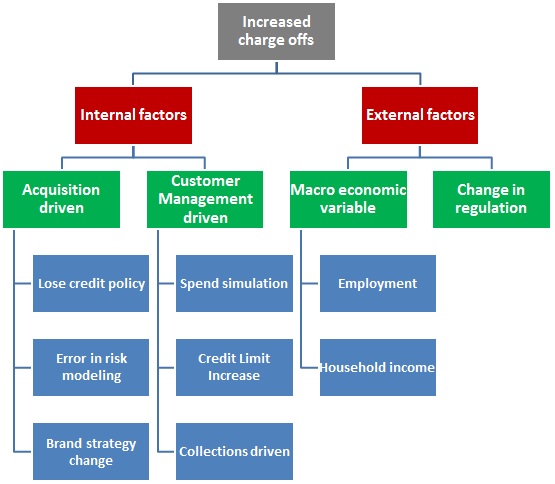
👁 structure
Once this structure is exhaustive and complete, you can simply plug in the data for each set of variables and see what is the reason.
The beauty of this practice is that you can layout any problem by spending an hour on it. If you do this right, solving the problem would then be a simple walk through. If you don’t, there is a big risk that you might focus on only internal factors (that too only from a specific area).
So, next time when you come across a problem to solve, don’t dive into the data. Put a structure around it, make sure you cover all the aspects, understand what is the most important factor, layout possible hypothesis and data requirements and then solve the problem. You will be surprised to see the reduction in time, if you follow these steps religiously.
As usual, if you know of any other practice, which has helped you think more structurally, do let me know.
Kunal Jain is the Founder and CEO of Analytics Vidhya, one of the world's leading communities of Al professionals. With over 17 years of experience in the field, Kunal has been instrumental in shaping the global Al landscape. His expertise spans diverse markets, from developed economies like the UK to emerging ones like India, where he has successfully led and delivered complex data-driven solutions. As a recognized thought leader, Kunal has empowered countless individuals to realize their Al ambitions through his visionary approach to Al education and community building. Before founding Analytics Vidhya, Kunal earned both his undergraduate and postgraduate degrees from IIT Bombay and held key roles at Capital One and Aviva Life Insurance across multiple geographies. His passion lies at the intersection of analytics, Al, and fostering a thriving community of data science professionals.
GPT-4 vs. Llama 3.1 – Which Model is Better?
Llama-3.1-Storm-8B: The 8B LLM Powerhouse Surpa...
A Comprehensive Guide to Building Agentic RAG S...
Top 10 Machine Learning Algorithms in 2026
45 Questions to Test a Data Scientist on Basics...
90+ Python Interview Questions and Answers (202...
8 Easy Ways to Access ChatGPT for Free
Prompt Engineering: Definition, Examples, Tips ...
What is LangChain?
What is Retrieval-Augmented Generation (RAG)?
Hi Kunal, One thing I have realized is that even within the realm of structured thinking, there are different structures possible.( say S1 and S2). There has to be obviously some analysis which should result in a person deciding that S1 is better/worse than S2. For example lets see somebody says what are the no of pizzas shop..should first question be "is it a city " or " does it have more youngsters "..obviously both of them are important but comes as the first filter is more often than not a victim of personal discretion. what do you think ?
Hi Ayush, Very valid question. The way I would look at it is that both of these structures ultimately fall under a single structure. The overall question being what factors influence location of pizza shop. There would be one set of hypothesis / variable related to geography (city, state, tier of cities), another set with economic variables of the city (average income, spend, credit, number of jobs, number of students or target market etc.), another set of variables with type of markets available (e.g. malls, residential markets) so on and so forth. Ultimately all these variables would go into a model, which would highlight which ones have higher influence and which would not. I don't see any need to judge whether S1 is better or S2. In fact a good analyst should never start create a solution starting from a biased position. Hope this answers what you had asked. Kunal
Hi Kunal, I am an HR Analyst, working for a financial services organization. I want to understand, how to create a data repository for a startup organization for your business function, and perform process monitoring and performance analytics. Regards, Ram
Hi Ram, Unfortunately, the process is relatively long, complex and one where decisions should be taken with all stakeholders. There are various parameters which impact the outcome (for example size of data, granularity of data, how long do you want to retain data). Depending on these answers, the outcome would vary. If your data is relatively small and you want to perform simple analysis and reporting, tools like Qlikview and Tableau can be good value for money. Thanks, Kunal
Edit
Resend OTP
Resend OTP in 45s