|
VOOZH | about |
|
VOOZH | about |
In this step-by-step guide to becoming a Data Scientist, we’ll walk you through the essential skills you need to learn. To acquire these skills, various resources are available, such as MOOCs (Massive Open Online Courses), YouTube Channels, and Blog Pages, which offer comprehensive learning materials. Additionally, you can explore Data Science Community Websites like Kaggle, Driven Data, and Analytics Vidhya, which provide opportunities to gain practical experience with datasets and invaluable insights into diverse Machine Learning techniques. By leveraging these resources, you can embark on a rewarding journey toward mastering the art of Data Science.
This article was published as a part of the Data Science Blogathon.
Data Science is all aboutusing various techniques, algorithms to analyze large amounts of datasets (both structured & Unstructured), to extract useful data insights, thus applying them in various business domains.
Data is being generated day by day at a massive rate and in order to process such massive data sets, Big Firms, Companies are hunting for good data scientists to extract valuable data insights from these data sets and using them for various business strategies, models, plans
The First and Foremost Step Towards Data Science should learning be a programming language ( i.e. Python). Python is the most common coding language, used by the Majority of Data Scientist, because of its simplicity, versatil,ity and being pre-equipped with powerful libraries ( like NumPy, SciPy, and Pandas) useful in data analysis and other aspects in Data Science. Python is an open-source language and supports various libraries.
Resource:
If Data Science is a language, then statistics is basically the grammar. Statistics is basically the method of analyzing, interpretation of large data sets. When it comes to data analysis and gathering insights, statistics is as noteworthy as air to us. Statistics help us understand the hidden details from large datasets
This is one of the key and important steps in the field of Data Science. This skill involves knowledge of various tools to import data from both local systems, as CSV files, and scraping data from websites, using beautifulsoup python library. Scrapping can also be API-based. Data collection can be managed with knowledge of Query Language or ETL pipelines in Python
This is the Step where most of the time is being spent as a Data Scientist. Data cleaning is all about obtaining the data, fit for doing work& analysis, by removing unwanted values, missing values, categorical values, outliers, and wrongly submitted records, from the Raw form of Data. Data Cleaning is very important as real-world data is messy in nature and achieving it with help of various python libraries(Pandas and NumPy)is really important for an aspirant Data Scientist
Resource:
EDA( Exploratory data analysis) is the most important aspect in the vast field of data science. It includes analyzing various data, variables, various data patterns, trends and extracting useful insights from them with help of various graphical and statistic l methods. EDA identifies various pattern which Machine learning algorithm might fail to identify. It includes all Data Manipulation, Analysis, and Visualization.
Resource:
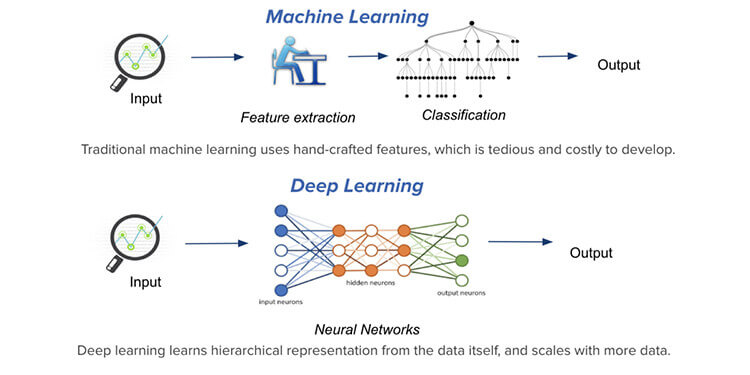
Machine learning is the core skill required to be a Data Scientist. Machine learning is used to build various predictive models, classification models, etc., and is being used By big firms, Companies to Optimize their planning as per the predictions. For example Car Price prediction
Deep Learning on the other hand is and an advanced version of Machine Learning which deploys the use of Neural Network, a framework that combines various machine learning algorithms for solving various tasks, for training data. Various Neural networks are recurrent neural network (RNN) or a convolutional neural network (CNN) etc
For Example: Face Recognition
Resources:
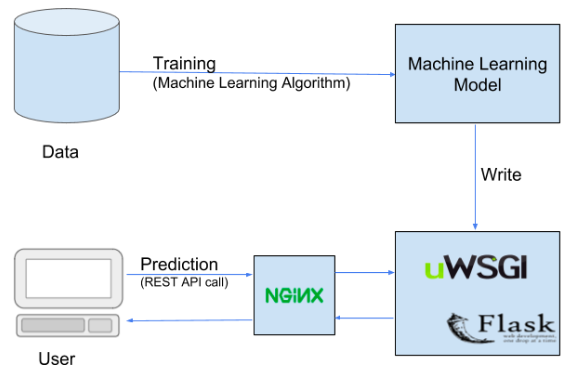
Deployment is basically the process of making your Machine Learning Model available to end-users for use. This is achieved by the integration of the model with various existing production environments thus implementing the practical use of the ML model for various Business solutions.
There are many services for deploying your ML model like Flask, Pythoneverywhere, MLOps , Microsoft Azure, Google Cloud, Heroku, etc
Testing and Validation of the Machine Learning Model after Deployment Should Be done In order to check its effectiveness and accuracy. Testing is an Important Step In Data Science for keeping the efficiency and effectiveness of the ML model In check.
There is Various Type Of Testing like A/B, AAB Testing, etc.
World’s Largest Data Science Communities like Kaggle, Analytics Vidhya is very helpful for getting in touch with various datasets and therefore can be used for practicing Various Data analysis techniques, machine learning algorithms. Competitions being held in these communities are also useful for sharpening the skills of data science, thus helping us to achieve our goal of becoming proficient in Data Science faster.
The data science field is a field that is evolving at a higher pace, therefore it requires inbuilt curiosity to explore more about the field, regularly updating and learning various skills & techniques.
This is the main skill that will always help us maintaining, updating new skills & concepts, thus preventing us from lagging behind various Data Science technological advancements.
The media shown in this article are not owned by Analytics Vidhya and is used at the Author’s discretion.
Aspiring Data Scientist | M.TECH, CSE at NIT DURGAPUR
GPT-4 vs. Llama 3.1 – Which Model is Better?
Llama-3.1-Storm-8B: The 8B LLM Powerhouse Surpa...
A Comprehensive Guide to Building Agentic RAG S...
Top 10 Machine Learning Algorithms in 2026
45 Questions to Test a Data Scientist on Basics...
90+ Python Interview Questions and Answers (202...
8 Easy Ways to Access ChatGPT for Free
Prompt Engineering: Definition, Examples, Tips ...
What is LangChain?
What is Retrieval-Augmented Generation (RAG)?
Short and to the point! It was a good read, would like to know more in detail.
I thought this course introduced the topic of data science very well. I think I have a much better idea how to describe data science and common terms associated with the field (like machine learning).
Thanks for sharing! This website is very informative. I appreciate this website. How long does it take to become a data scientist from scratch?
Edit
Resend OTP
Resend OTP in 45s