|
VOOZH | about |
|
VOOZH | about |
A combination of science, technology, and medicine in the dynamic digital age has unveiled new data systems to improve statistics, improve healthcare and drug delivery, and improve health information reporting on clinical decisions.
Data science in health care has seen the latest and most rapid progress in 3 ways:
This article was published as a part of the Data Science Blogathon.
As new data sets are being developed, analyzed, and growing available, a number of key questions arise, including the following:
The best way to change health care is to identify risks and recommend prevention programs before health risks become a major problem. By wearing it with other tracking devices that pay attention to historical patterns and genetic information, you may be able to see the problem before it gets out of hand.
Data science analytical methods learn from historical data and make accurate predictions of results. They process patient data, make sense of clinical notes, find interactions, symptomatic associations, general adjectives, habits, diseases, and make predictions. The effects of certain biological factors such as genome structure or clinical variability are taken into account to predict the occurrence of specific diseases. Common causes include prediction of disease progression or prevention to reduce the risk and side effects. The main benefit is to improve the quality of life of patients and the quality of medical conditions.
Omada Health is a digital medical company that uses smart devices to create customized behavioral plans and online training to help prevent chronic health conditions, such as diabetes, high blood pressure, and high cholesterol.
On the mental health side, Canada’s new start-up, Awake Labs, is tracking data on children with autism in dress, informing parents before the meltdown.
Diagnosis
The National Academies of Sciences, Engineering, and Medicine estimates that some 12 million Americans receive incorrect diagnoses, sometimes with life-threatening consequences.
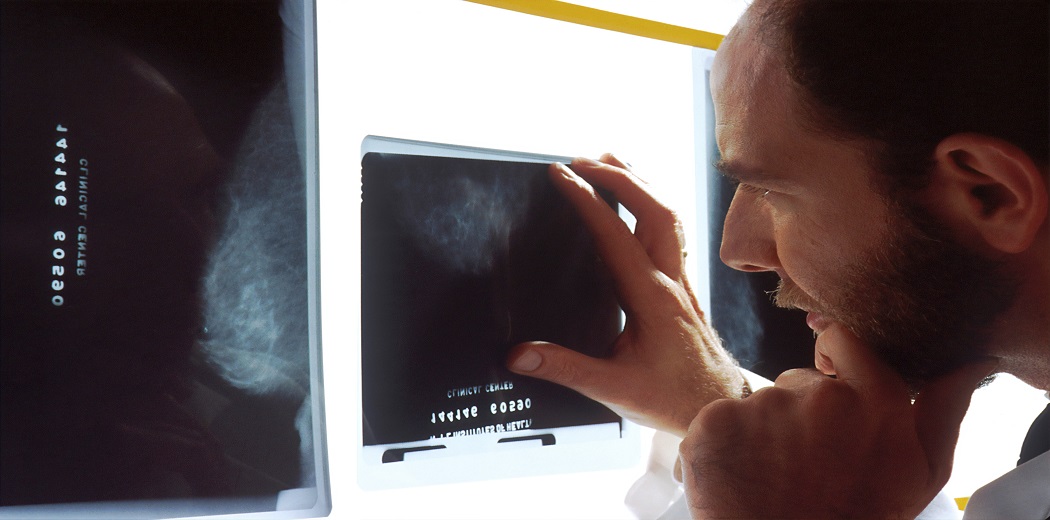
The healthcare sector is reaping huge benefits from the application of data science applied to medical thinking. There are many things to research in this area, and one of the best studies is Big Data Analytics, published in BioMed Research International. According to this study, popular methods of thinking include magnetic resonance imaging (MRI), X-ray, computed tomography, mammography, and so on. Many methods are used to deal with the variation, adjustment, and magnitude of these images.
A lot more is improved to improve image quality, extract data from photos efficiently, and provide a more accurate translation. In-depth learning algorithms increase diagnostic accuracy by learning from previous examples and suggesting better treatment solutions.
IBM estimates that medical images contain about 90% of the total medical data. Doctors use imaging therapy to get a clearer understanding of body parts.
Also, evaluate the function of other organs to diagnose and treat any disorder or disorder. The insights gained from these images can make a difference in a patient’s treatment.
The most popular imaging techniques focus on developing, dissecting, and eliminating denoising that allows for in-depth analysis of the anatomy, as well as the diagnosis of various diseases.
The most promising applications are for tumors, artery stenosis, delineate, etc. Different methods and frameworks contribute to medical thinking in a variety of areas. Hadoop, a popular analytical framework, uses MapReduce to obtain appropriate parameters for tasks such as lung tissue planning. It works with machine learning methods, vector support equipment (SVM), content-based image guidance, and wavelet analysis with strong texture separation.
The process of drug discovery is very complex and involves many areas. Big ideas are often tied to billions of tests, big money, and time. On average, it takes 12 years to get a prescription. Scientific algorithms and machine learning data simplify and streamline this process, adding perspective to each step from the initial testing of drug chemistry to predicting success rate depending on biological factors. Such algorithms can predict how the compound will work in the body using advanced mathematical modeling and simulation instead of a “lab test”.
The idea behind the discovery of computer drugs is to create a simulation of computer models as a viable network for life making it easier to predict future results with high accuracy. Allows selection, which test should be performed and incorporates all new information into the ongoing learning loop. Analogous techniques are used to predict the adverse effects of certain chemical compounds.
Computerized drug discovery also improves the collection and use of a wide variety of historical information during the drug manufacturing process. Combining genetic research with protein-binding data can produce amazing results. In addition, it allows chemical experiments against all possible combinations of different cell types, genetic mutations, and other conditions. Using this data, unsupervised learning, and technology as the next generation sequence, enables scientists to create models that predict the outcome from independent variations.
The effectiveness of the treatment approach builds on the idea that in many cases patients do not need to visit doctors in person. Using a mobile app can provide a more effective solution by “bringing a doctor to the patient” instead. AI-enabled mobile applications can provide basic health care support, usually like chatbots.
Simply describe your symptoms, or ask questions, and get important details about your medical condition based on a broad network of symptoms and causes. Apps may remind you to take your medication on time, and if necessary, give an appointment with your doctor. This approach promotes a healthy lifestyle by encouraging patients to make healthier decisions, saves their time waiting in line for appointments, and allows physicians to focus on more serious situations.
Machine learning algorithms use processing and natural language to provide accurate information, create a complex map of the user’s status, and provide a personalized experience. The most popular applications these days are Yours.MD, Babylon Health, Ada, and so on.
In this way, the most appropriate customer support is built on the obvious reliance that does not rely entirely on machines in health care. Therefore, the great task of machine learning is to find the perfect balance between physicians and computers. The key to automation is simple methods, as we have just explained, and give professionals the ability to focus on more complex problems.
Technical Writer 👩💻 | AI Developer😎| | Avid Reader 📖 | Data Science ❤️ | Open Source Contributor 🌍
Hey, I am Sharvari Raut. I love to write!
Connect with me on:
Twitter: https://twitter.com/aree_yarr_sharu
LinkedIn: https://t.co/g0A8rcvcYo?amp=1
The media shown in this article on Data Science in Healthcare are not owned by Analytics Vidhya and is used at the Author’s discretion.
I am Sharvari Raut. I love to write. I am a final year student in Computer Science and Engineering from NCER Pune. I have worked as a freelance technical writer for few startups and companies. Having 2 yrs of experience in Technical Writing I have written over 100+ technical articles which are published till now. Writing for Analytics Vidhya is one of my favourite things to do.
GPT-4 vs. Llama 3.1 – Which Model is Better?
Llama-3.1-Storm-8B: The 8B LLM Powerhouse Surpa...
A Comprehensive Guide to Building Agentic RAG S...
Top 10 Machine Learning Algorithms in 2026
45 Questions to Test a Data Scientist on Basics...
90+ Python Interview Questions and Answers (202...
8 Easy Ways to Access ChatGPT for Free
Prompt Engineering: Definition, Examples, Tips ...
What is LangChain?
What is Retrieval-Augmented Generation (RAG)?
Health care industry are used data science for the developing or maintaining the data of the drug related or patient related data operation .making medicine formula or other information are manipulating better way or fetching best way. Thanks for providing this valuable topic Keep sharing
Edit
Resend OTP
Resend OTP in 45s