|
VOOZH | about |
|
VOOZH | about |
This article was published as a part of the Data Science Blogathon
A Basic understanding of Databases.
Here I am going to discuss with you that how databases are widely used in industry, what are they, and how it helps store and retrieve data.
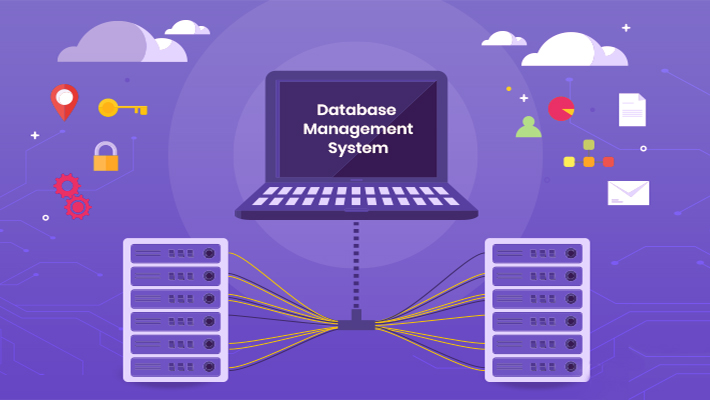
Basically, DBMS (Data Base Management System) is an efficient system or software by which we manage databases like MS Access, Oracle, SQL, and so on. We will look briefly at all these concepts.
1. What is the database?
2. What is a Database management system?
3. Database Models
4. The Advantages and Disadvantages of DBMS(Database Management System)
5. Conclusion
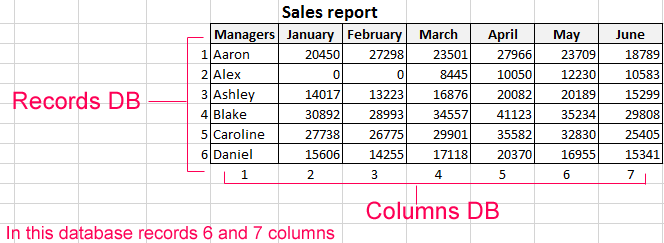
It is a collection of well-organized related records incoherent manner. These records are stored in the form of a table. As we know there rows and columns. Rows are known as tuples and columns are known as attributes of the database.
Example:- Employee records, Students records, telephone Directory, Inventory control, Patients records, Sales reports, etc.
The Database stores metadata in an area which is called the data dictionary, which represents the tables, columns, indexes, constraints, and other items that creates the database.
Metadata is the data that describes the structure of data within a database. If you know how your data is arranged, then you easily can retrieve it. Because the database consists of a description of its structure, it’s “self-describing”. The database is integrated because it includes not only data items but also the relationships between data items.
A database management system (called DBMS) is a set of programs that are used to define, administer, and process databases and their associated applications. The database is being managed in essence, a structure that you build to hold valuable data.
We can say a DBMS is the tool you use to build that structure and operate on the data contained within the database. You can find many DBMS programs in the market today. Some DBMS programs will run on large and powerful machines, some on personal computers, notebooks, tablets, etc.
Some programs even run on smartphones.
This is for such products to work on multiple platforms or we can say on networks that contain various classes of machines. An even stronger trend is that to store data in data centers or even to store it out in the cloud also, which could be a public cloud run by a large company such as
Amazon, Google, or Microsoft, through the Internet, or it could be a private cloud that is operated by the same organization that is storing the data on its own intranet.
A DBMS that runs on platforms of multiple classes, large and small that is called Scalable.
Database Model gives us a brief idea of our final system after its complete implementation. It defines the data elements and the relationships among the data elements. Database Models are used to show how data is stored, how it is connected, how it can be updated, and how to access the database management system that is nothing but its own structure.
Here, we are going to use a set of symbols and text to represent the information so that members of the organization can communicate and understand it very well. Although many database models are being used nowadays the Relational Model is the most widely used.
Apart from the Relational models, there are various other types of database models about which we will study in detail in this blog. Some of the Database Models in DBMS are as below:
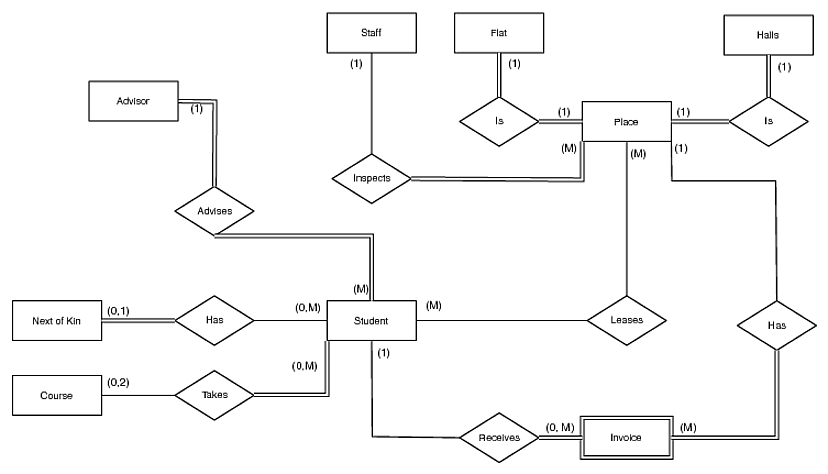
The Entity-Relationship model (or we can say ER model) graphically shows the logical relationships of entities (or say objects) to create a database. It is also beneficial for the developers to understand the overall system by just looking at the “ER diagram”.
– Entity:- An entity is a real-world object, which is distinguishable from different objects. Like it can be a place, concept, or thing.
Example:-
Enrollment=000968347, Teacher, Building, etc
– Entity Set:-
Collection of entity is called entity set.
Example:- Employee Records table, Students Records table.
– Relationship (Mapping):- The Relations between attributes of any two entity sets are called Mapping.
There are four types of relationships as follow:-
1. 1:1(One to One) Mapping
2. 1: M (One to Many) Mapping
3. M: 1 (Many toOne) Mapping
4. M: N (Many to Many) Mapping
For Example:-
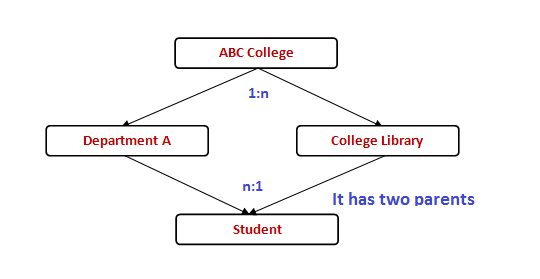
The network model is a part/extension of the hierarchical model that we will see below. The network Model was the most famous model before the Relational model. The network model is the same as the hierarchical model, there is the only difference is that a “record can have more than one parent”. It can replace the Hierarchical tree with a Graph.
For Example: In the example below, we can see that the node student has two parents i.e. Dept and Library of college. Hence It is not possible in the hierarchical model.
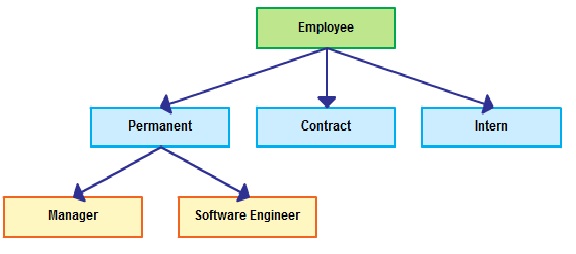
The hierarchical model was the first “DBMS model”. This model arranges the data in the hierarchical tree structure. Basically, the hierarchy starts from the root which has root data, and then it expands in the form of a tree adding child node to the parent node and so on. The hierarchical model easily describes some real-world relationships like Food Recipes, etc.
For Example:- We can represent the relationship between the Employees that represent different types of employees in the Company in the following way:-
1. DBMS has Centralized Control.
2. Data independence allows the dynamic changes and growth potential.
3. Data quality is enhanced.
4. Security enforcement of DBMS is possible.
1. Problems associated with centralization are one of the disadvantages.
2. Cost of Software/Hardware required for database and migration too.
It was all about the basics of the Database, we will learn all advanced concepts in the upcoming article. I hope you liked my article. Do share with your friends. Thank You!
I am Software Engineer, data enthusiast , passionate about data and its potential to drive insights, solve problems and also seeking to learn more about machine learning, artificial intelligence fields.
GPT-4 vs. Llama 3.1 – Which Model is Better?
Llama-3.1-Storm-8B: The 8B LLM Powerhouse Surpa...
A Comprehensive Guide to Building Agentic RAG S...
Top 10 Machine Learning Algorithms in 2026
45 Questions to Test a Data Scientist on Basics...
90+ Python Interview Questions and Answers (202...
8 Easy Ways to Access ChatGPT for Free
Prompt Engineering: Definition, Examples, Tips ...
What is LangChain?
What is Retrieval-Augmented Generation (RAG)?
Edit
Resend OTP
Resend OTP in 45s