|
VOOZH | about |
|
VOOZH | about |
This article was published as a part of the Data Science Blogathon
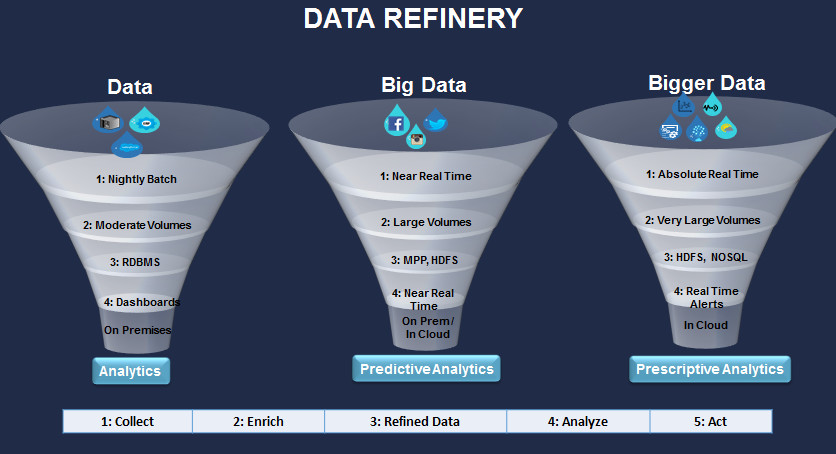
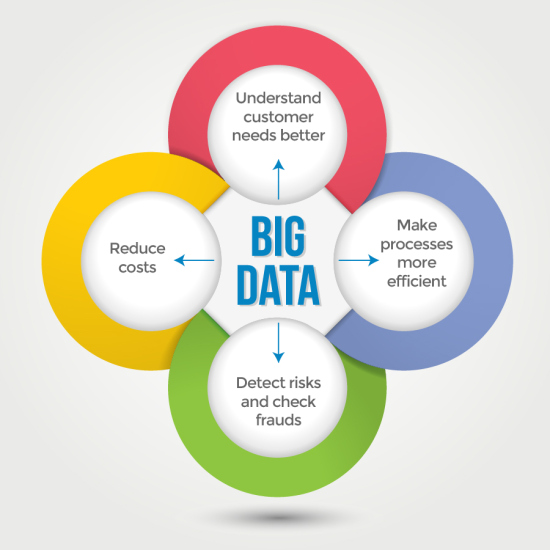
One thing that comes to our mind after hearing Big Data Analytics is that this field might be somewhat related to Data Science right? So starting with the answer, yes it’s related to the same the only difference is, in Big Data Analytics, analysts work on a huge amount of data. Big Data Analytics refers to data insights. It is the process of finding important data, patterns, market trends, relationships, and user needs. With the advancement of technology, it is quite possible to find and study any information and get the reports very quickly. The basic purpose is to provide better decision-making and to stay safe from fraudulent activities. This technology has many characteristics like big volume, faster rate. Artificial Intelligence (AI), mobile, social media, and the Internet of Things (IoT) are operating data through new sources of data.
The concept of Big Data analytics was designed years ago. Most of the companies came to know that if they will store and collect the information related to their business, then after analyzing the data they can change their methods, to have better results. In the early 1950s, when the word big data was not even found, at that time many companies used this method. In the form of spreadsheets and in the form files which were examined by the people manually to find what is trending in the market. Speed and efficiency are the main advantages of this technology. The main benefit that companies are getting is that they have the potential to work at a faster pace.
The working of BDA can be summarised in eight simple steps, which are as follows:
Step 1: Business case estimation– It is the first step in which the needs and goals of a company are analyzed, this step is also referred to as requirement analysis as in this stage we need to gather all the information about the requirement for which we need the BDA solution.
Stage 2: Recognition of information– At this stage, many sources that can provide a lot of information are seen and recognized. This step is also called as Data Gathering stage as we have to gather all the data from different sources in order to create a solution for the problem. This is the sole stage of the pipeline without which the whole BDA solution won’t work as without data there would be no insight.
Step 3: Data refining– Here, undesired data which was collected from the previous stage is removed. Sometimes data that we collect from multiple sources may not be compatible and also may not be of any use to us so we need to remove that data to tackle the compatibility issues in the future.
Stage 4: Data production– The data which is not appropriate is taken and then it is changed to a worthy form. Here the data is cleaned according to the usecases and algorithms.
Step 5: Data collection– Same data from different sheets are combined to remove the extra space.
Stage 6: Data scanning– Here comes the role of logical and mathematical tools. Now all the data is examined to extract useful information.
Step 7: Perceiving data– The company strategist now puts the data into a graphical and systematic form using tools like Tableau, etc.
Stage 8:Final examination outcome– This is the final step, in which the final report is given to the business stakeholders and owner who can take mandatory steps.
This technology helps organizations and companies to collect the data of their competitors. As to make new strategies to beat the competition. Also, it guides to perform best business moves. Moreover, this can increase the profit and will be more convenient.
More Advantages are as follows:
With the advancement of technology, the demand for data management experts has increased in companies like Software AG, Oracle Corporation, IBM, Microsoft, SAP, and Dell, etc. These companies have spent more than $15 billion on organizations having experience in data analytics and management. In 2010, this industry was having a worth almost $100 billion and was growing at a faster pace with an increment of approximately 10 percent every year. It is almost twice as fast as the software work. Industry specialists, academicians, and many other important contributors accepted that this technology is a big game-changer.
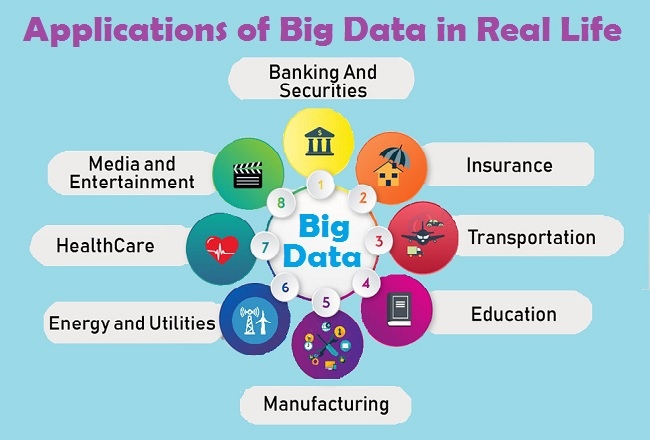
This is the list of the top 10 industries that are using Big Data Analytics:
Here is a list of tools that are useful in big data analytics:
This was the brief intro about BDA, which can help in the improvement of multiple real-life sectors. The process of BDA is similar to those of Data Science and Machine Learning, the only difference here is that we get data from multiple sources and in huge amounts.
Hope this article gave you a head start in order to go deeper into the concept of Big Data Analytics.
Thanks for reading this article do like if you have learned something new, feel free to comment See you next time !!! ❤️
References
Applied Machine Learning Engineer skilled in Computer Vision/Deep Learning Pipeline Development, creating machine learning models, retraining systems, and transforming data science prototypes to production-grade solutions. Consistently optimizes and improves real-time systems by evaluating strategies and testing real-world scenarios.
GPT-4 vs. Llama 3.1 – Which Model is Better?
Llama-3.1-Storm-8B: The 8B LLM Powerhouse Surpa...
A Comprehensive Guide to Building Agentic RAG S...
Top 10 Machine Learning Algorithms in 2026
45 Questions to Test a Data Scientist on Basics...
90+ Python Interview Questions and Answers (202...
8 Easy Ways to Access ChatGPT for Free
Prompt Engineering: Definition, Examples, Tips ...
What is LangChain?
What is Retrieval-Augmented Generation (RAG)?
Edit
Resend OTP
Resend OTP in 45s