VOOZH about

URL: https://www.analyticsvidhya.com/blog/2022/07/different-types-of-cloud-based-services/

โ‡ฑ Different Types of Cloud-based Services - Analytics Vidhya


India's Most Futuristic AI Conference Is Back โ€“ Bigger, Sharper, Bolder

  • d
  • :
  • h
  • :
  • m
  • :
  • s

Reading list

Different Types of Cloud-based Services

anushkakhatri Last Updated : 29 Jul, 2022
4 min read

This article was published as a part of the Data Science Blogathon.

Introduction

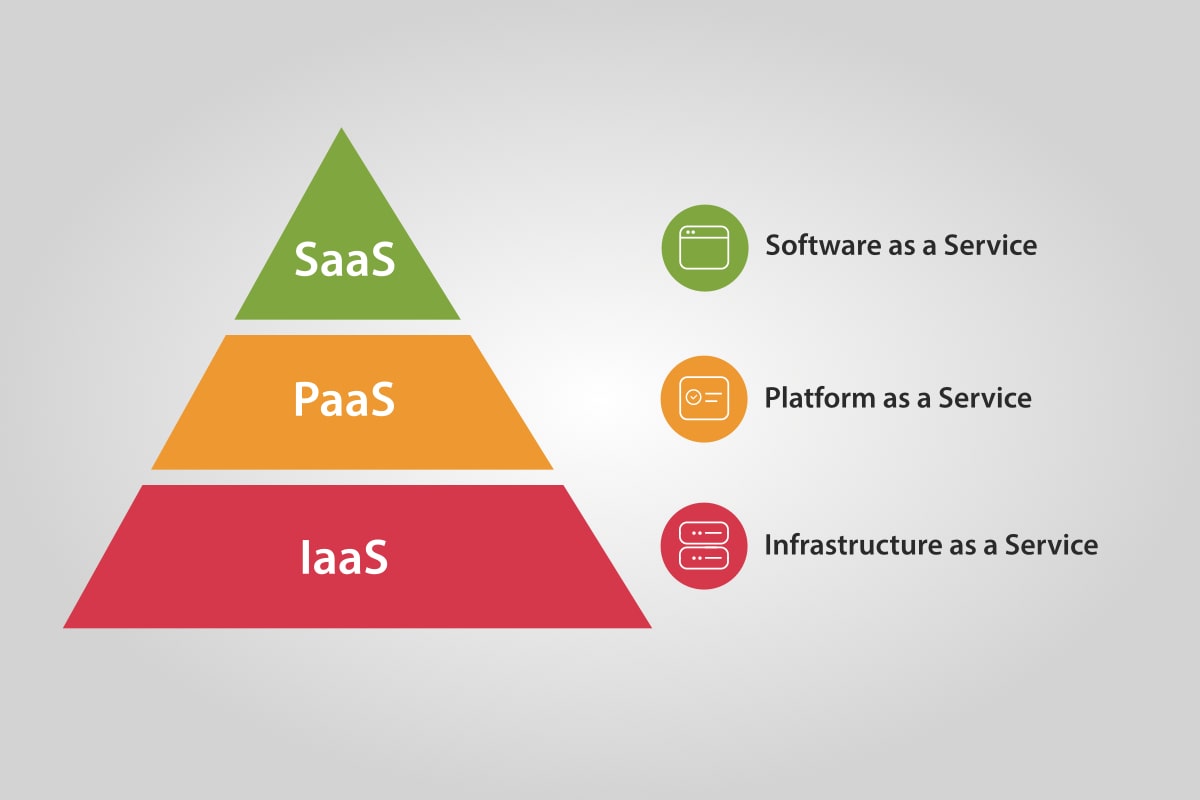
Cloud computing is one of the fastest-growing IT technologies today. By 2025, 83% of enterprise workloads will be in the cloud. According to the IDC report, the world will spend $160 billion on cloud services and infrastructure in 2018. The cloud encompasses a variety of online services. It is important for businesses considering cloud services to understand the differences between IaaS, PaaS, and SaaS. You should choose the right model depending on your business requirements and the number of tasks you want to delegate or handle yourself. Selecting the ideal cloud service is undoubtedly difficult, and you must weigh several factors before deciding. Here, we have covered all of the benefits and drawbacks of SaaS, PaaS, and IaaS to help you decide which model is best for your company.
๐Ÿ‘ cloud-based service
https://litslink.com/blog/iaas-paas-saas

IaaS

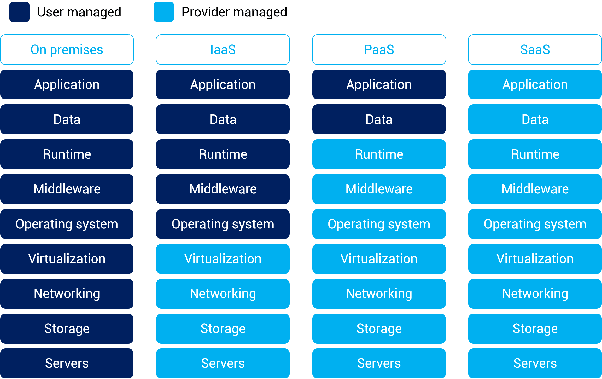
Essentially, this is a virtual version of a physical data center. Cloud infrastructure providers use virtualization technology to deliver scalable computing resources to their clients, including servers, networks, and storage. Clients benefit from this since they cannot purchase personal hardware and manage its components. Instead of deploying their applications and platforms in physical data centers, they can use the providerโ€™s virtual machines. The IaaS provider manages the entire infrastructure, but users fully control it. Apps and operating systems are installed and maintained by users, as well as security, runtime, middleware, and data.

Advantages of IaaS:

1. Model with the greatest flexibility and dynamic potential.
2. Due to pay-as-you-go pricing, it is cost-effective.
3. Automated hardware deployment makes it easy to use.
4. Employees have more time for other tasks because management tasks are virtualized.

Disadvantages of IaaS:

1. Multitenant architecture poses security risks.
2. Customers cannot access their data for some time due to vendor outages.
3. Learning how to manage new infrastructure requires team training.

PaaS

PaaS, or Platform as a Service, is an internet-based framework for creating software. This platform contains software components and tools developers can use to create, customize, test, and launch applications. Vendors of PaaS manage servers, operating system updates, security patches, and backups. App developers and data managers do not have to worry about maintaining infrastructure, middleware, and operating systems. IaaS and PaaS differ primarily in how much control users are given.

Advantages of PaaS:

1. Since PaaS-built software is cloud-based, it is highly scalable, available, and multi-tenant.
2. Streamlining and speeding up the development process.
3. The cost of creating, testing, and launching apps is reduced.
4. Policy automation.
5. A reduction in the amount of coding required.

Disadvantages of PaaS:

1. Issues related to data security.
2. It is not possible to cloud-enable every element of existing infrastructure.
3. Speed, reliability, and support depending on the vendor.

SaaS

The vendor provides cloud-based software with this offering. SaaS applications need not be downloaded and installed on local devices, but plugins may be necessary occasionally. SaaS software can be accessed via the web via APIs and is located on a distant cloud network. Customers can work together on projects, store data, and analyze it with these apps.
The most popular type of cloud computing is SaaS. Everything, from hardware stability to app functionality, is managed by the SaaS provider. In this arrangement, clients are exclusively responsible for using programs to carry out their jobs. In this instance, the provider controls the clientโ€™s software experience.

Advantages of SaaS:

1. There are no hardware costs, and initial setup costs are not incurred.
2. Upgrades are performed automatically.
3. Adaptability to multiple devices.
4. Easily accessible from anywhere, A pay-per-use model.
5. Adaptability, Customization is easy.

Disadvantages of SaaS:

1. A lack of control.
2. Solutions are limited.
3. The need for connectivity cannot be overstated.

Difference between IaaS, PaaS, and SaaS

https://www.quora.com/What-is-the-difference-between-IaaS-SaaS-and-Paas

IaaS PaaS SaaS
1.    IaaS stands for Infrastructure as a Service
PaaS stands for Platform as a service.
SaaS stands for software as a service.
2.    As part of IaaS, the cloud provider manages the
infrastructure.
As a part of PaaS, the cloud provider manages
both infrastructure and platform. 
As part of SaaS, the cloud provider manages all
infrastructure, platforms, and software.
3.    In IaaS, you need to manage the platform and software. In PaaS, you need to manage the software.  As a SaaS user, you do not need to manage
anything.
4.    Infrastructure as a Service(IaaS) can be used for data recovery, storage, software testing, and development. Platform as a service can be used for framework
development and management, as well as business intelligence.
 Software as a service (SaaS) enables users to use applications for personal or business purposes.
5.    IaaS platforms are highly scalable.
PaaS platforms allow customers to scale computing resources according to their business size. The SaaS model is scalable with different pricing tiers for every business level.
6.    Providers fully control infrastructure. Due to the limited capabilities of PaaS platforms, users may not be able to customize cloud operations.  An internet connection and a browser are all required for users to use SaaS apps.

Conclusion

After reading through all of the material above, you will understand the value of cloud services and why they are so well-liked by companies. The advantages of cloud solutions are enormous. Thus, it is unsurprising that this economic sector is experiencing such a sharp expansion. Choosing any model from the list above depends entirely on your business needs and the kind of task you want to carry out.

Key takeaways:

  • Several technical words are related to cloud computing, but IaaS, PaaS, and SaaS are the most crucial.
  •  They are regarded as the three key pillars that provide stability for cloud computing.
  • Your business goals will determine which of these three types you ultimately select.
  •  The three cloud models each have unique traits and capabilities.
  •  It is crucial to comprehend their main distinctions from one another.
  • Whether you want to use the cloud for storage, require a powerful platform to create custom apps, or want complete control over your infrastructure, you must pick the correct cloud provider.
  • Moving to cloud services is necessary to maintain your companyโ€™s organizational strength regardless of your option.
  • You can choose to use just one cloud computing model or all three modelsโ€™ services.
  •  The size and complexity of your organization will determine this.

The media shown in this article is not owned by Analytics Vidhya and is used at the Authorโ€™s discretion.

Passionate about solving business problems with data-driven solutions. Skilled in the field of Data Science and Big Data Engineering.
I have worked on various projects, including developing predictive models, analyzing complex data sets, and designing and implementing data architectures and pipelines.
I enjoy exploring new data science and data engineering techniques and keeping up with the latest industry trends.

Login to continue reading and enjoy expert-curated content.

Free Courses

Generative AI - A Way of Life

Explore Generative AI for beginners: create text and images, use top AI tools, learn practical skills, and ethics.

Getting Started with Large Language Models

Master Large Language Models (LLMs) with this course, offering clear guidance in NLP and model training made simple.

Building LLM Applications using Prompt Engineering

This free course guides you on building LLM apps, mastering prompt engineering, and developing chatbots with enterprise data.

Improving Real World RAG Systems: Key Challenges & Practical Solutions

Explore practical solutions, advanced retrieval strategies, and agentic RAG systems to improve context, relevance, and accuracy in AI-driven applications.

Microsoft Excel: Formulas & Functions

Master MS Excel for data analysis with key formulas, functions, and LookUp tools in this comprehensive course.

Responses From Readers

Flagship Programs

GenAI Pinnacle Program| GenAI Pinnacle Plus Program| AI/ML BlackBelt Program| Agentic AI Pioneer Program

Free Courses

Generative AI| DeepSeek| OpenAI Agent SDK| LLM Applications using Prompt Engineering| DeepSeek from Scratch| Stability.AI| SSM & MAMBA| RAG Systems using LlamaIndex| Building LLMs for Code| Python| Microsoft Excel| Machine Learning| Deep Learning| Mastering Multimodal RAG| Introduction to Transformer Model| Bagging & Boosting| Loan Prediction| Time Series Forecasting| Tableau| Business Analytics| Vibe Coding in Windsurf| Model Deployment using FastAPI| Building Data Analyst AI Agent| Getting started with OpenAI o3-mini| Introduction to Transformers and Attention Mechanisms

Popular Categories

AI Agents| Generative AI| Prompt Engineering| Generative AI Application| News| Technical Guides| AI Tools| Interview Preparation| Research Papers| Success Stories| Quiz| Use Cases| Listicles

Generative AI Tools and Techniques

GANs| VAEs| Transformers| StyleGAN| Pix2Pix| Autoencoders| GPT| BERT| Word2Vec| LSTM| Attention Mechanisms| Diffusion Models| LLMs| SLMs| Encoder Decoder Models| Prompt Engineering| LangChain| LlamaIndex| RAG| Fine-tuning| LangChain AI Agent| Multimodal Models| RNNs| DCGAN| ProGAN| Text-to-Image Models| DDPM| Document Question Answering| Imagen| T5 (Text-to-Text Transfer Transformer)| Seq2seq Models| WaveNet| Attention Is All You Need (Transformer Architecture) | WindSurf| Cursor

Popular GenAI Models

Llama 4| Llama 3.1| GPT 4.5| GPT 4.1| GPT 4o| o3-mini| Sora| DeepSeek R1| DeepSeek V3| Janus Pro| Veo 2| Gemini 2.5 Pro| Gemini 2.0| Gemma 3| Claude Sonnet 3.7| Claude 3.5 Sonnet| Phi 4| Phi 3.5| Mistral Small 3.1| Mistral NeMo| Mistral-7b| Bedrock| Vertex AI| Qwen QwQ 32B| Qwen 2| Qwen 2.5 VL| Qwen Chat| Grok 3

AI Development Frameworks

n8n| LangChain| Agent SDK| A2A by Google| SmolAgents| LangGraph| CrewAI| Agno| LangFlow| AutoGen| LlamaIndex| Swarm| AutoGPT

Data Science Tools and Techniques

Python| R| SQL| Jupyter Notebooks| TensorFlow| Scikit-learn| PyTorch| Tableau| Apache Spark| Matplotlib| Seaborn| Pandas| Hadoop| Docker| Git| Keras| Apache Kafka| AWS| NLP| Random Forest| Computer Vision| Data Visualization| Data Exploration| Big Data| Common Machine Learning Algorithms| Machine Learning| Google Data Science Agent
๐Ÿ‘ Av Logo White

Continue your learning for FREE

Forgot your password?
๐Ÿ‘ Av Logo White

Enter OTP sent to

Edit

Wrong OTP.

Enter the OTP

Resend OTP

Resend OTP in 45s

๐Ÿ‘ Popup Banner
๐Ÿ‘ AI Popup Banner