How to Validate Nested Objects with Class-Validator in Nest.js?
Last Updated : 16 Oct, 2024
Validating nested objects in Nest.js using the class validator is crucial for ensuring the integrity and structure of incoming data, especially when dealing with complex data models. Class validator works seamlessly with Nest.js to validate incoming request data using Data Transfer Objects (DTOs). This process helps in enforcing rules, such as required fields, data types, and nested object validation.
These are the following topics that we are going to explore:
DTOs (Data Transfer Objects): Used to define the shape and structure of data being transferred, DTOs in Nest.js help in validating and transforming the data.
Nested Objects: When DTOs contain properties that are objects themselves, those nested objects need their own validation rules.
class-validator: A library that provides a set of decorators and utility functions to validate objects against specified rules.
class-transformer: This library helps in transforming plain JavaScript objects into instances of classes, which is essential for nested validation.
How Does It Work?
Define DTOs: Create classes that represent the structure of the data, using class-validator decorators to specify validation rules.
Nested Validation: For nested objects within a DTO, use the @ValidateNested decorator to ensure that nested objects are validated according to their own rules.
Apply in Controllers: Use these DTOs in controller methods to automatically validate incoming requests.
Global Validation Pipe: Enable a global validation pipe in Nest.js to enforce validation across the entire application.
Why Validate Nested Objects?
Data Integrity: Ensures that the nested objects conform to the expected structure and rules.
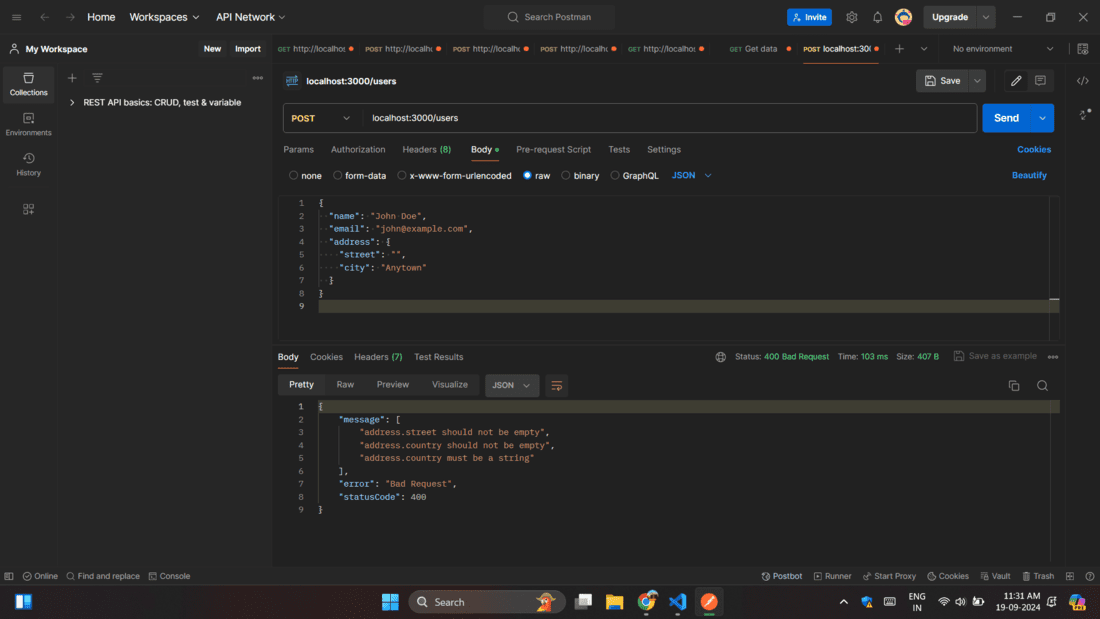
Error Handling: Provides clear error messages if the data is invalid, helping with debugging and client-side validation feedback.
Security: Prevents malformed or malicious data from reaching your business logic and database.
Steps to Validate nested objects with class-validator
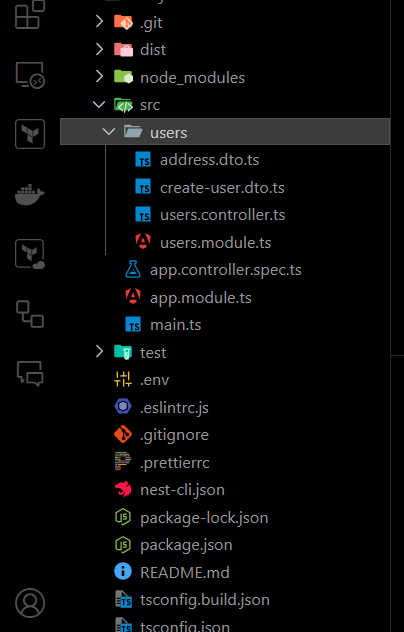
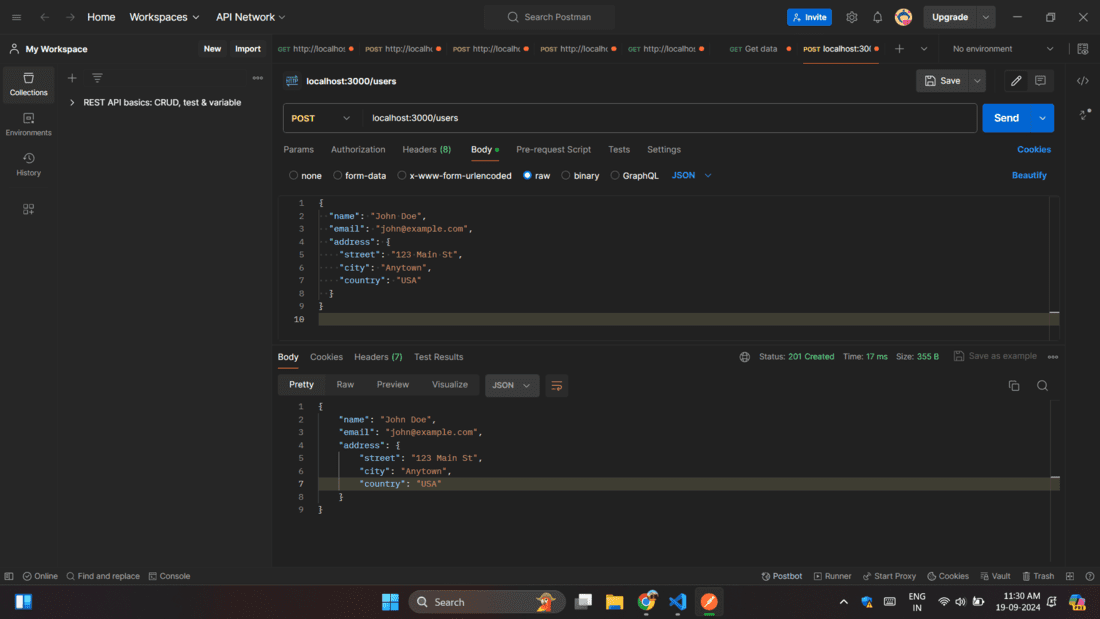
Here's a complete setup to validate nested objects with class-validator in a Nest.js application. This example includes defining the DTOs, setting up the controller, and enabling validation globally.