|
VOOZH | about |
|
VOOZH | about |
Data explorer is a part of modeling and it is a package in R programming. It is used for data analysis. This package, which might be what we are referring to, is designed to provide a convenient interface to explore and visualize data, especially for initial exploratory data analysis (EDA) tasks.
Here we are taking the dataset: penguins, from the Palmer penguins package, and also loading the package for usage by typing the following commands:
The introduce () function gives the basic information about our dataset i.e., penguins.
Output:
tibble [344 × 8] (S3: tbl_df/tbl/data.frame)
 $ species : Factor w/ 3 levels "Adelie","Chinstrap",..: 1 1 1 1 1 1 1 1 1 1 ...
 $ island : Factor w/ 3 levels "Biscoe","Dream",..: 3 3 3 3 3 3 3 3 3 3 ...
 $ bill_length_mm : num [1:344] 39.1 39.5 40.3 NA 36.7 39.3 38.9 39.2 34.1 42 ...
 $ bill_depth_mm : num [1:344] 18.7 17.4 18 NA 19.3 20.6 17.8 19.6 18.1 20.2 ...
 $ flipper_length_mm: int [1:344] 181 186 195 NA 193 190 181 195 193 190 ...
 $ body_mass_g : int [1:344] 3750 3800 3250 NA 3450 3650 3625 4675 3475 4250 ...
 $ sex : Factor w/ 2 levels "female","male": 2 1 1 NA 1 2 1 2 NA NA ...
 $ year : int [1:344] 2007 2007 2007 2007 2007 2007 2007 2007 2007 2007 ...
Output:
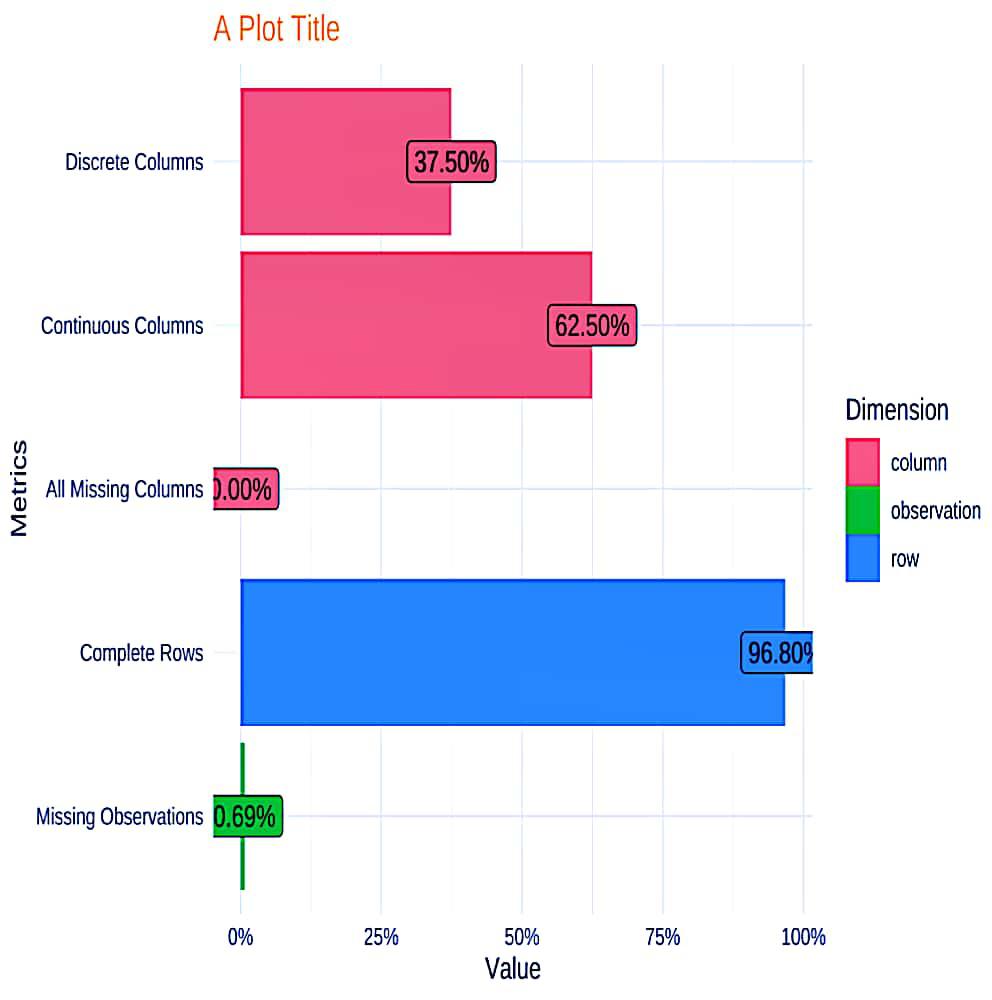
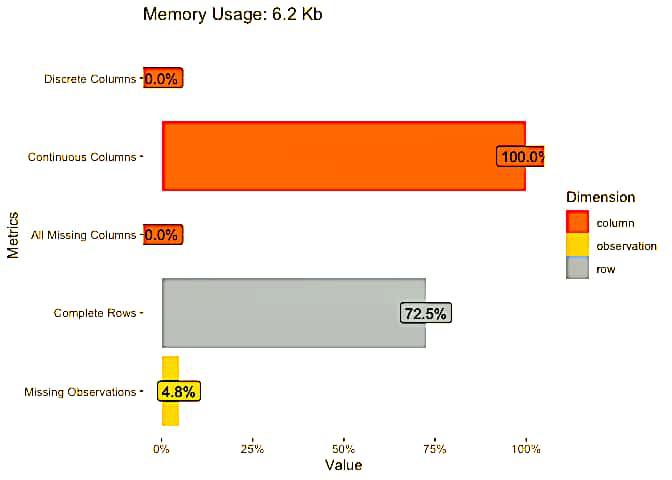
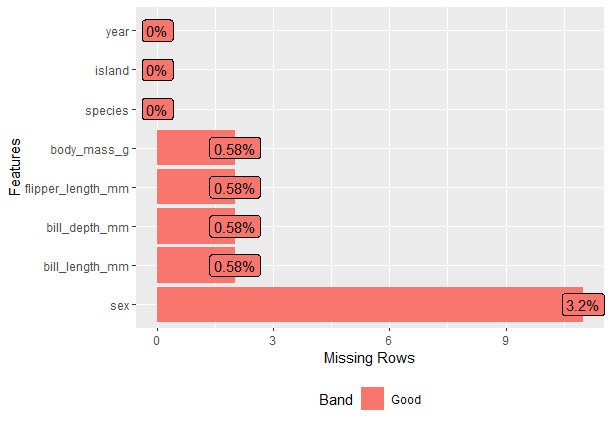
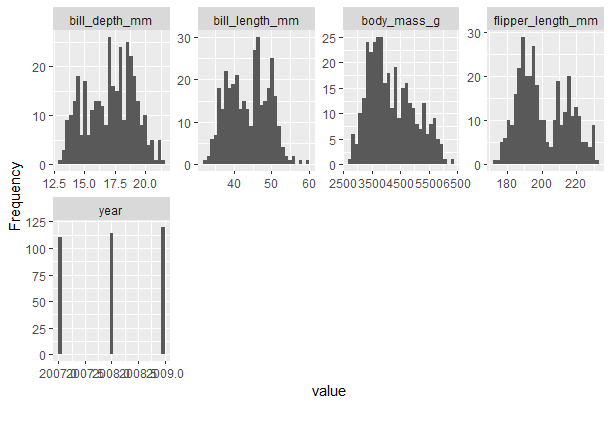
👁 ImageTo visualize the data which is shown above introduce the () function.
Output:
👁 ingOutput:
👁 ingOutput:
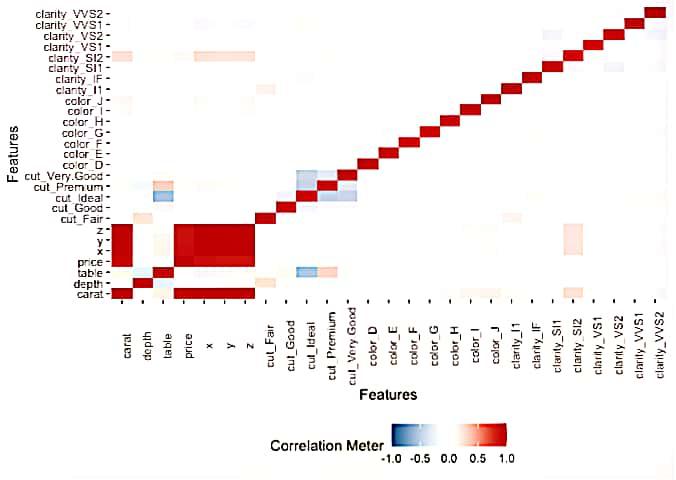
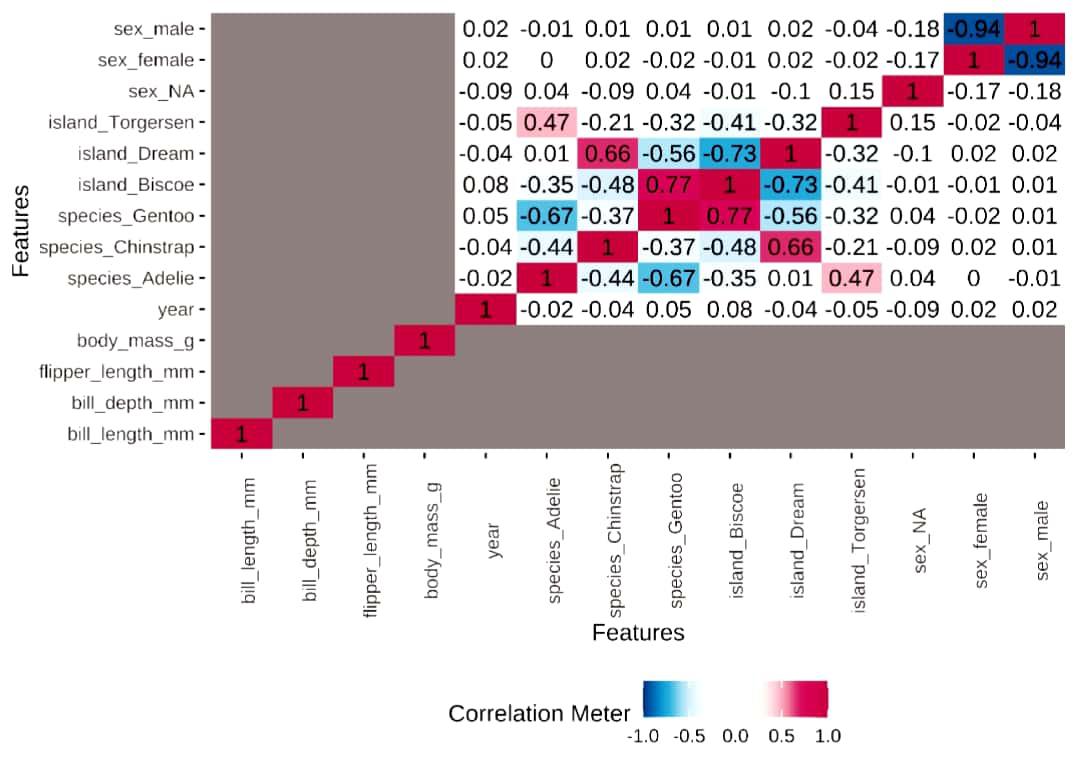
👁 WhatsApp-Image-2023-07-13-at-111245-PMVisualizes the heatmap, in this, we use the argument called type=" " .,
create_report() is used to create the report on a dataset. and this will generate a file on our computer.
From this, we get a report in HTML format that will show the complete information of the data.
Here,
ggtheme() adds a ggplot2 theme, to the plot.
For example, we are taking the theme_minimal() theme.
As well title() adds title to the plot.
Output:
👁 New-Doc-2023-07-19-224016_1(2)theme_config() is used to customize the elements in the plot.
plot. title is used to add color to the plot.
Output:
👁 ImageReport:
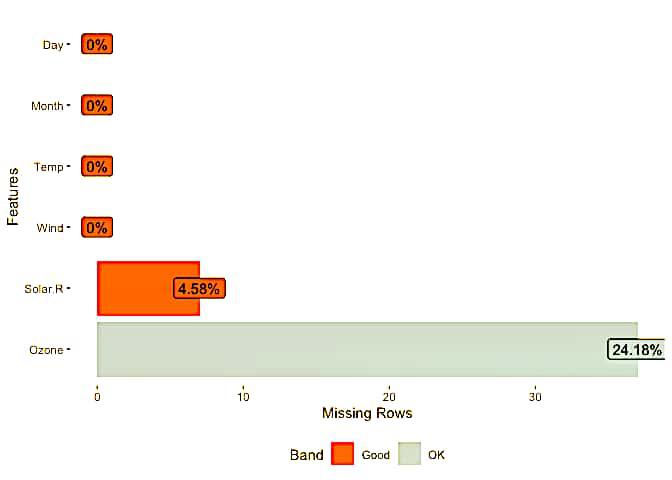
To get the report of dataset: air quality we have to use create _ report.
From this, we get a report in HTML format that will show the complete information of the data.
Output:
 rows columns discrete_columns continuous_columns all_missing_columns
1 153 6 0 6 0
 total_missing_values complete_rows total_observations memory_usage
1 44 111 918 6376
Output:
👁 New-Doc-2023-07-23-154416_1Output:
👁 New-Doc-2023-07-23-154620_1Output:
👁 New-Doc-2023-07-23-154851_1Output:
👁 New-Doc-2023-07-23-155129_1Output:
👁 New-Doc-2023-07-23-155553_1Output:
👁 New-Doc-2023-07-23-155834_1

.jpg)